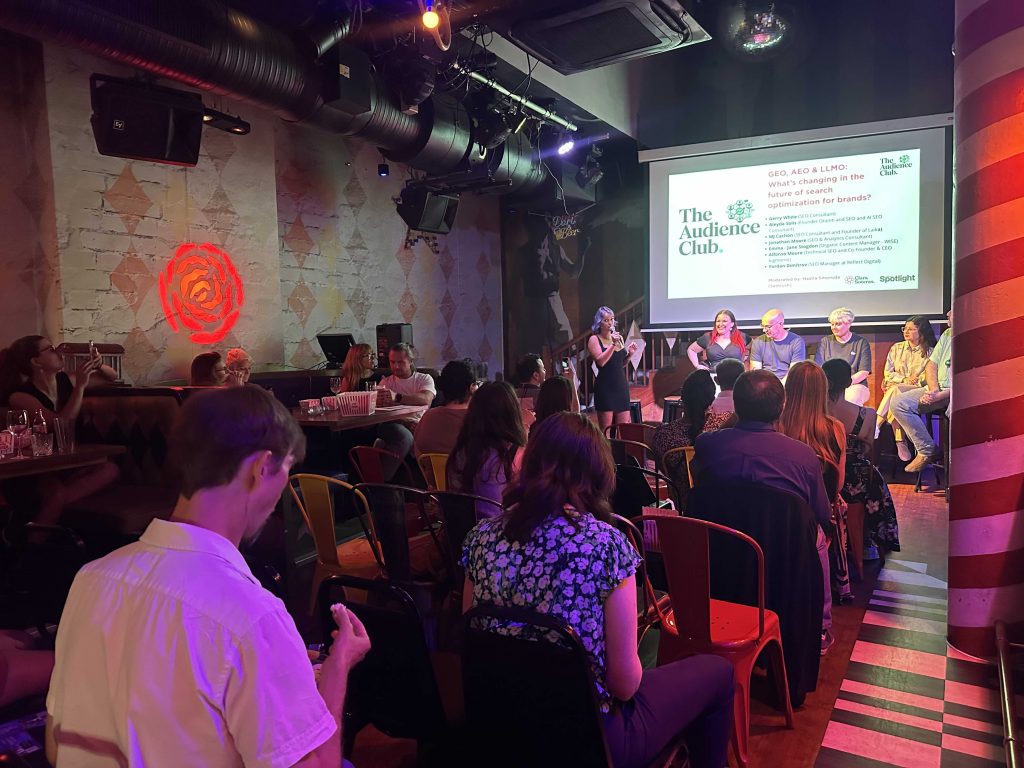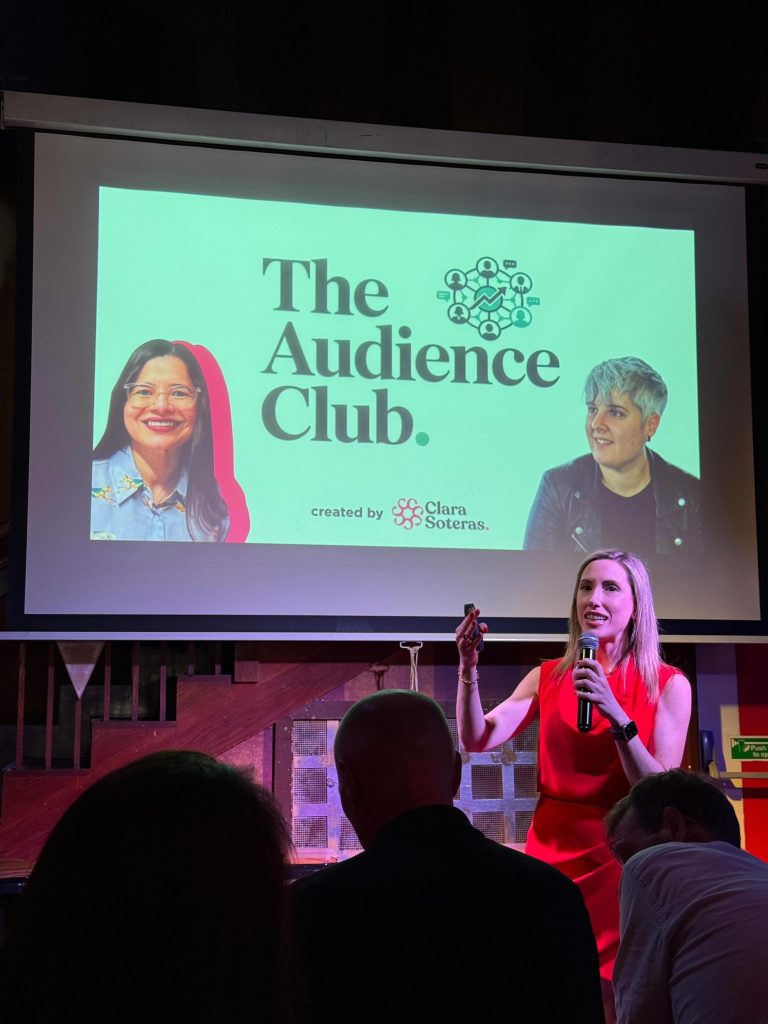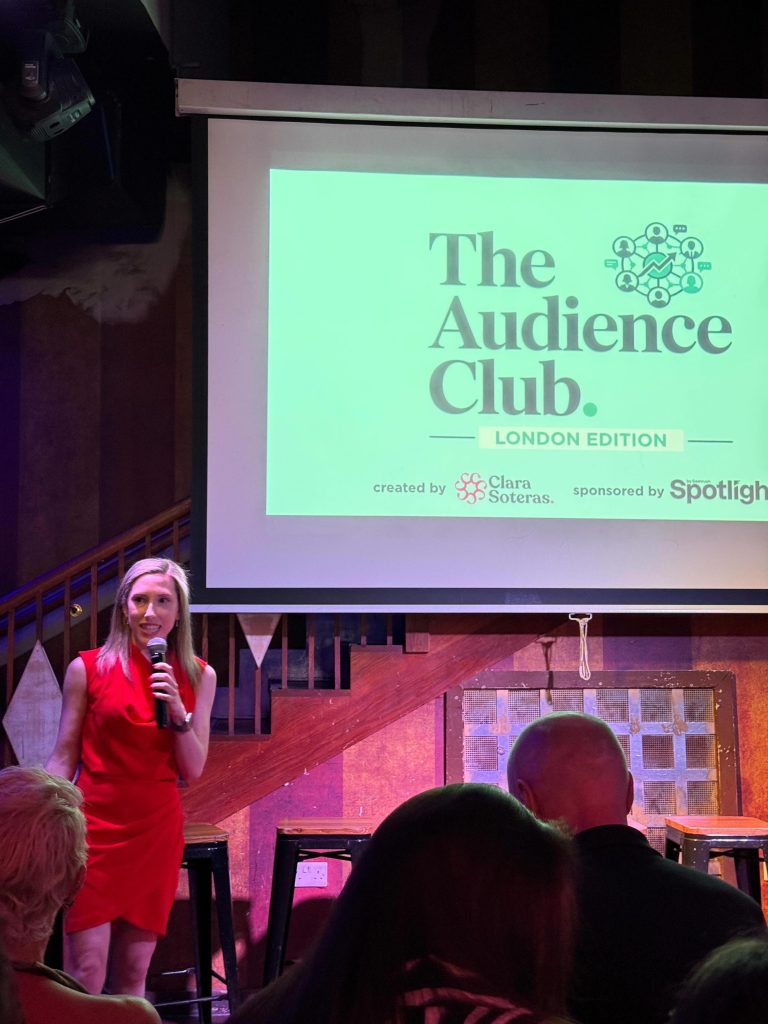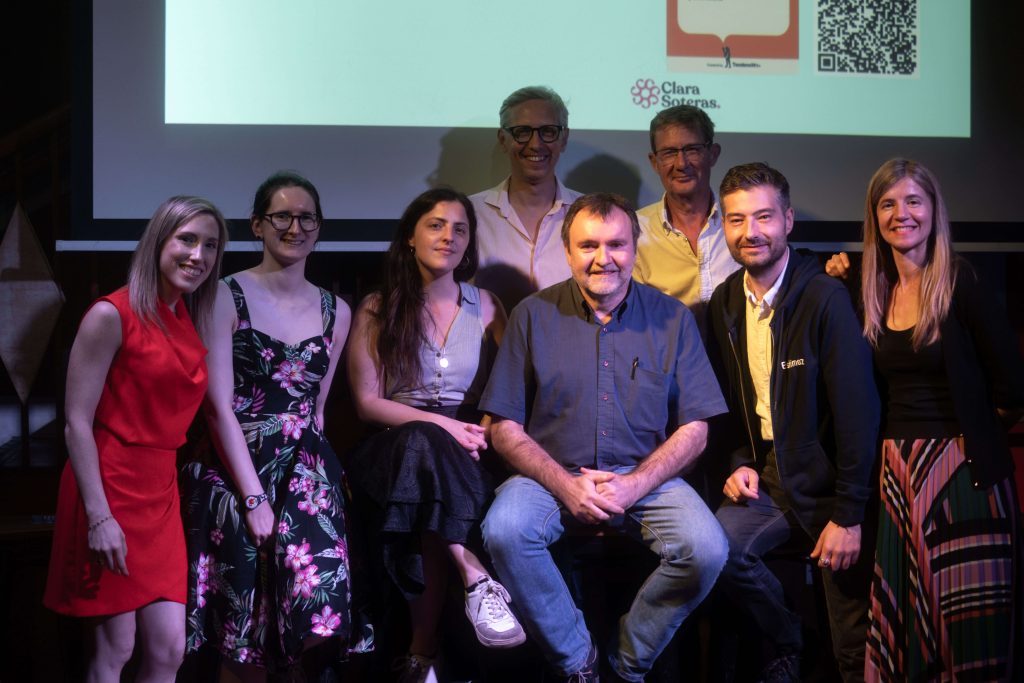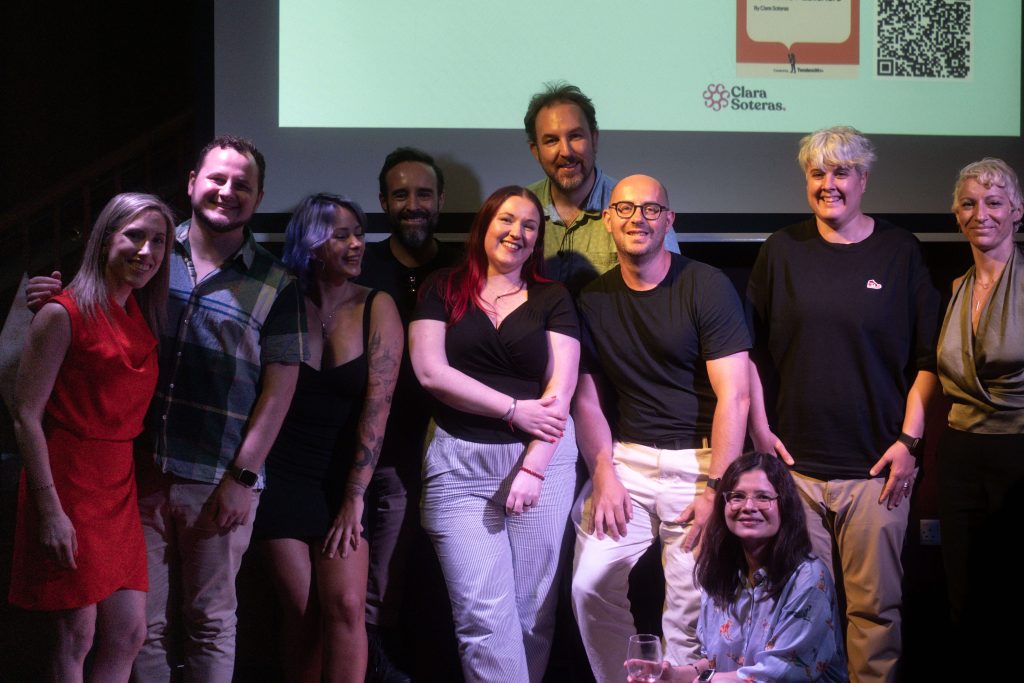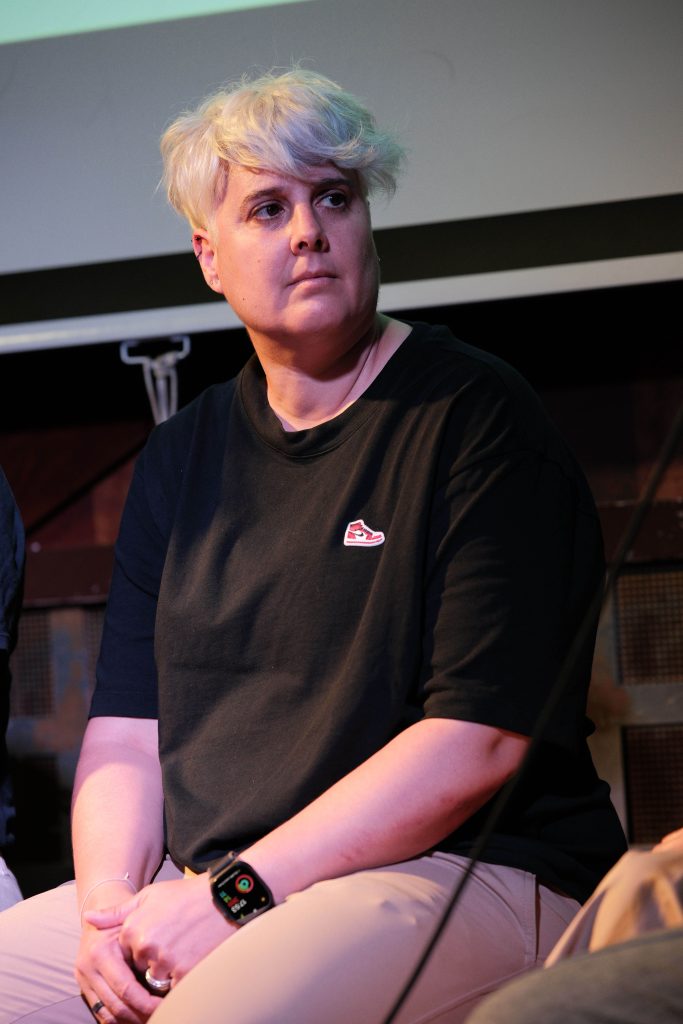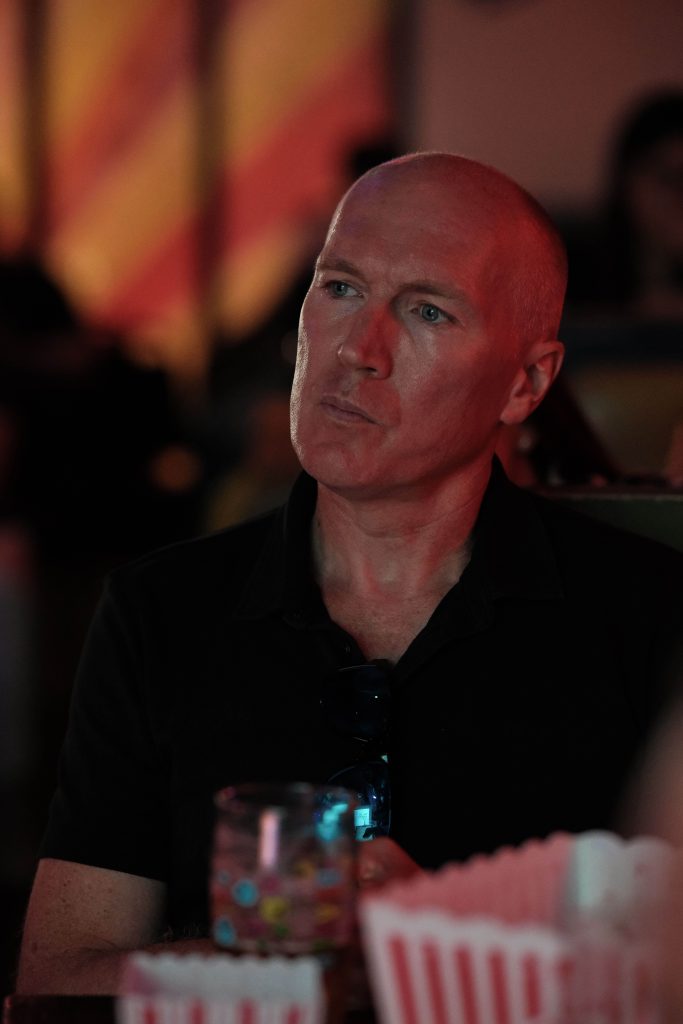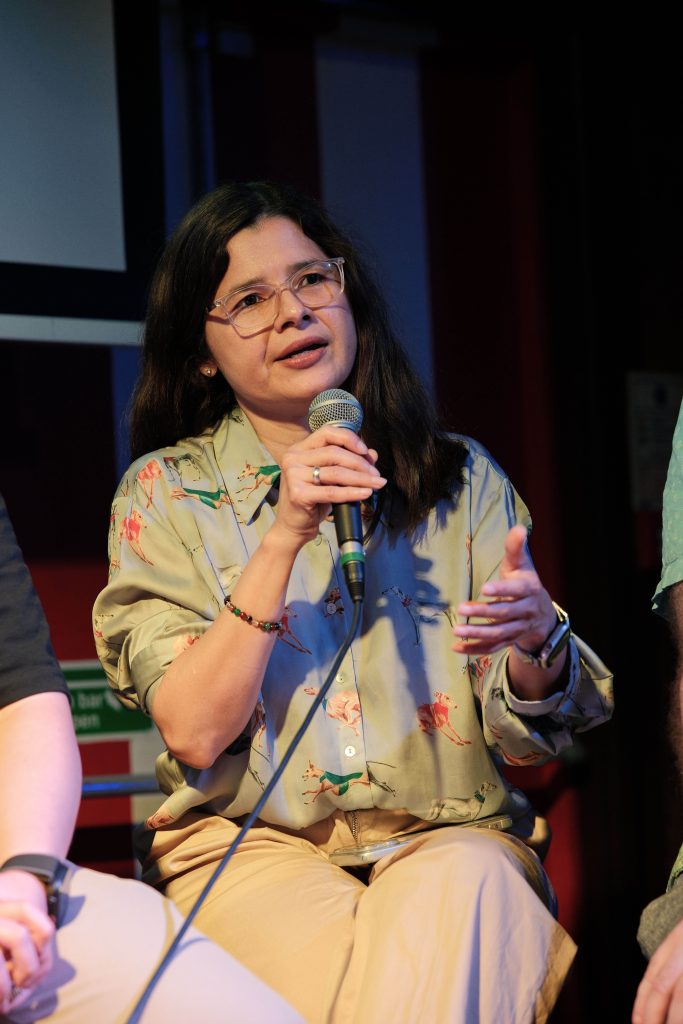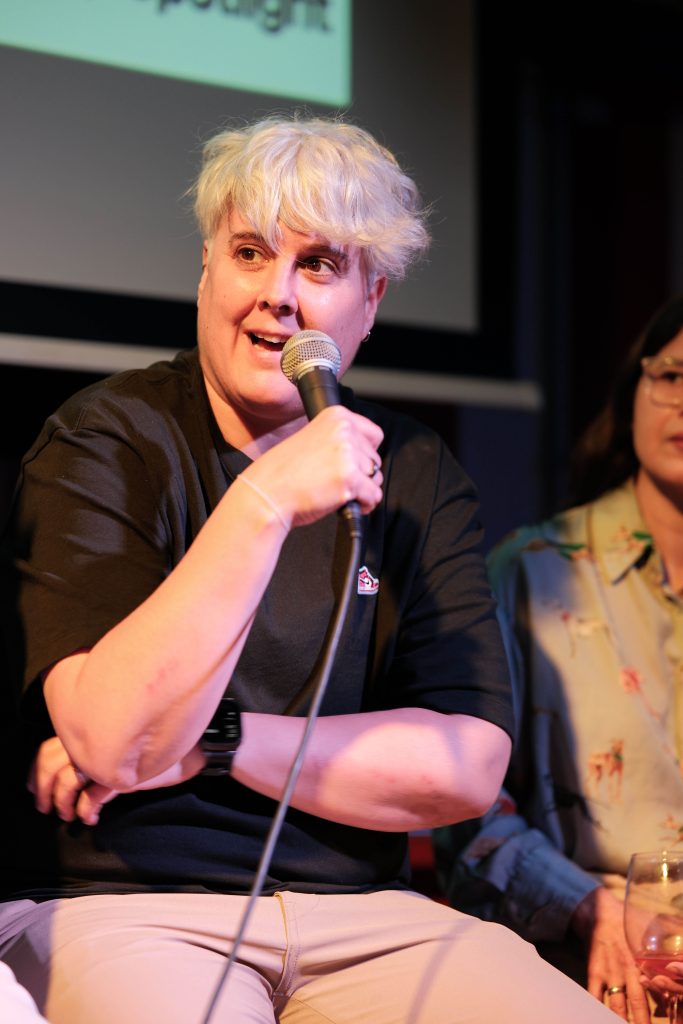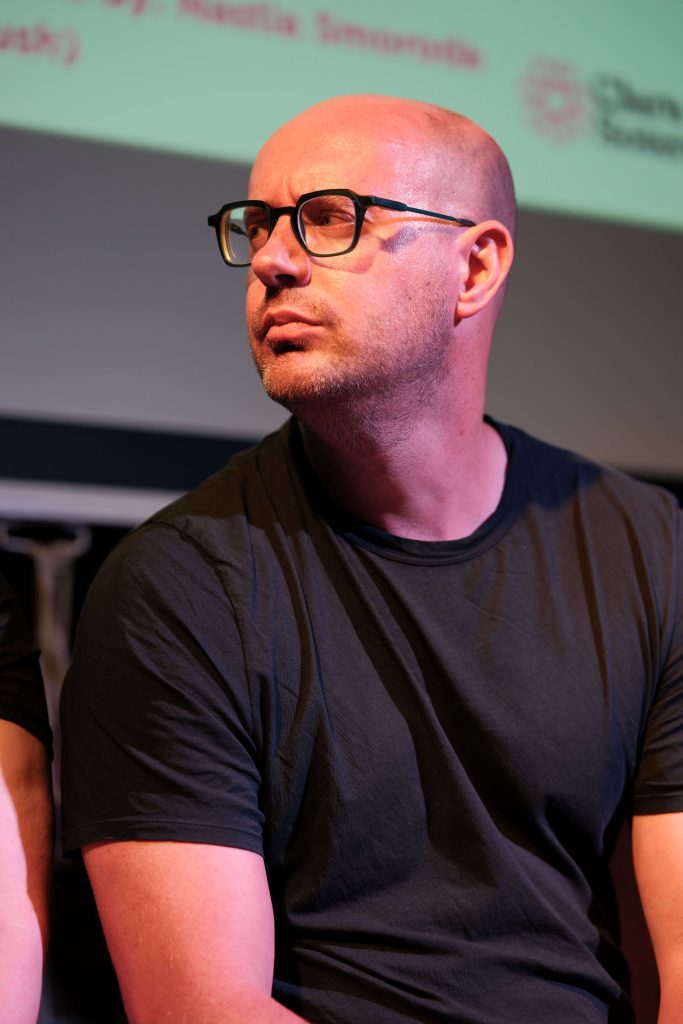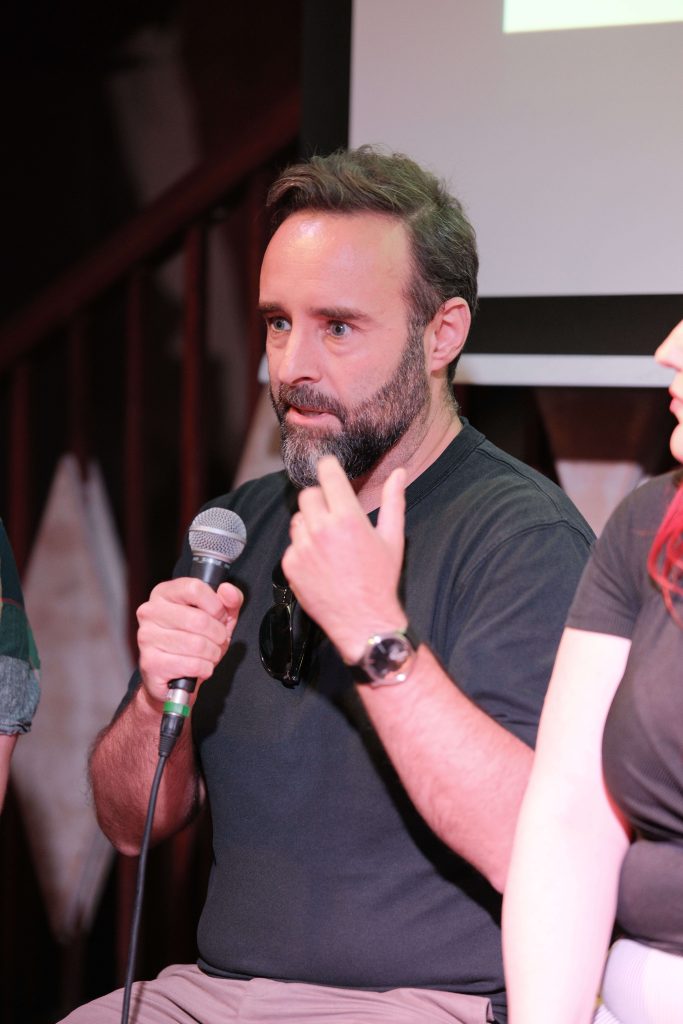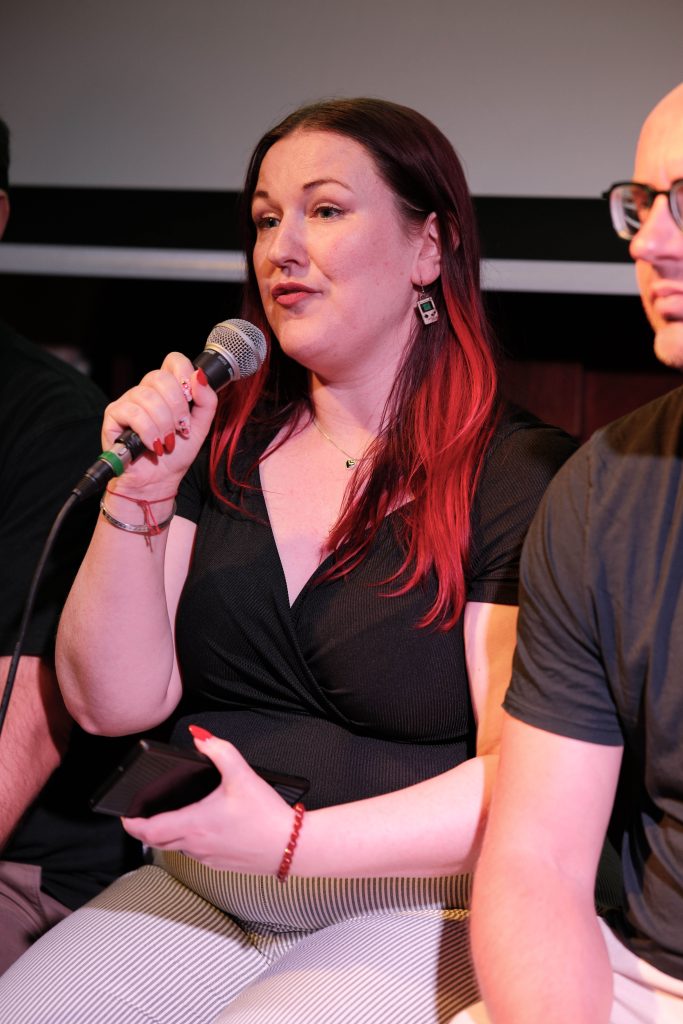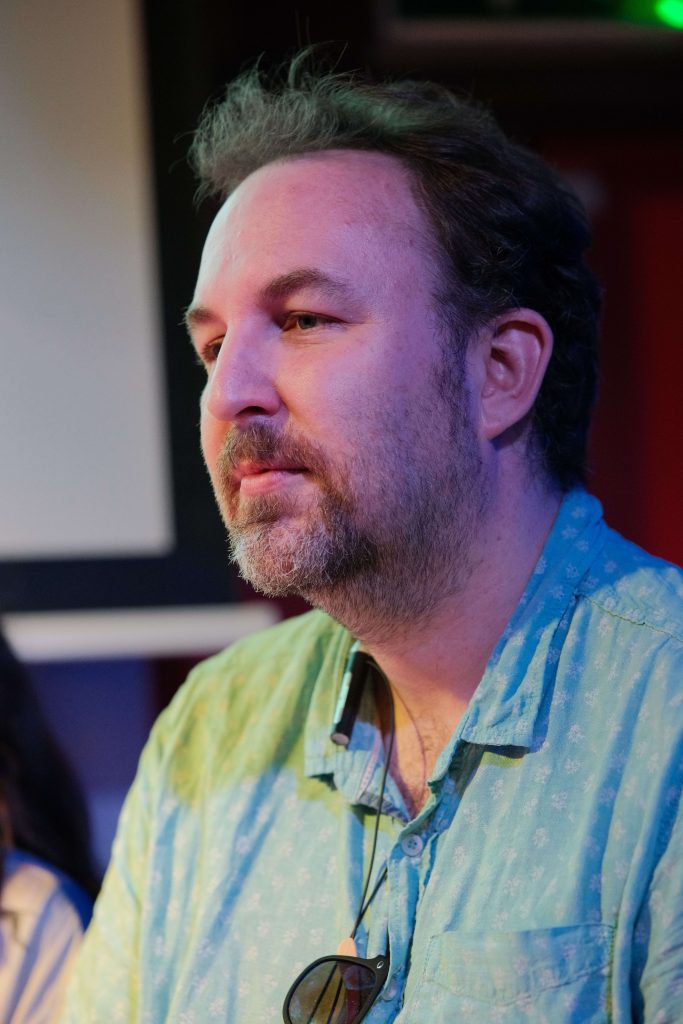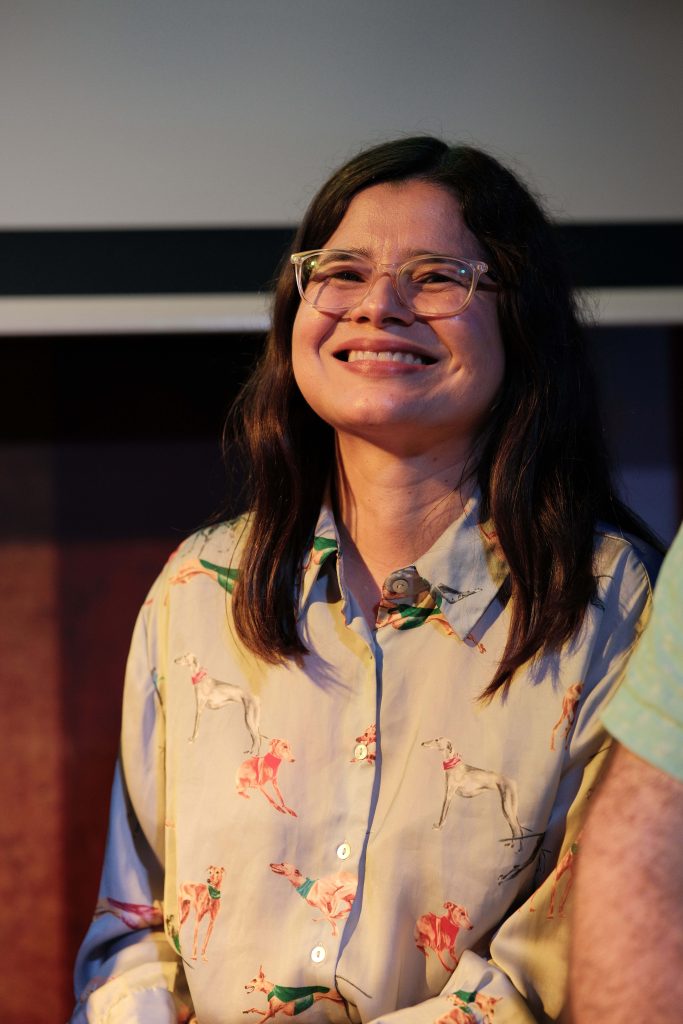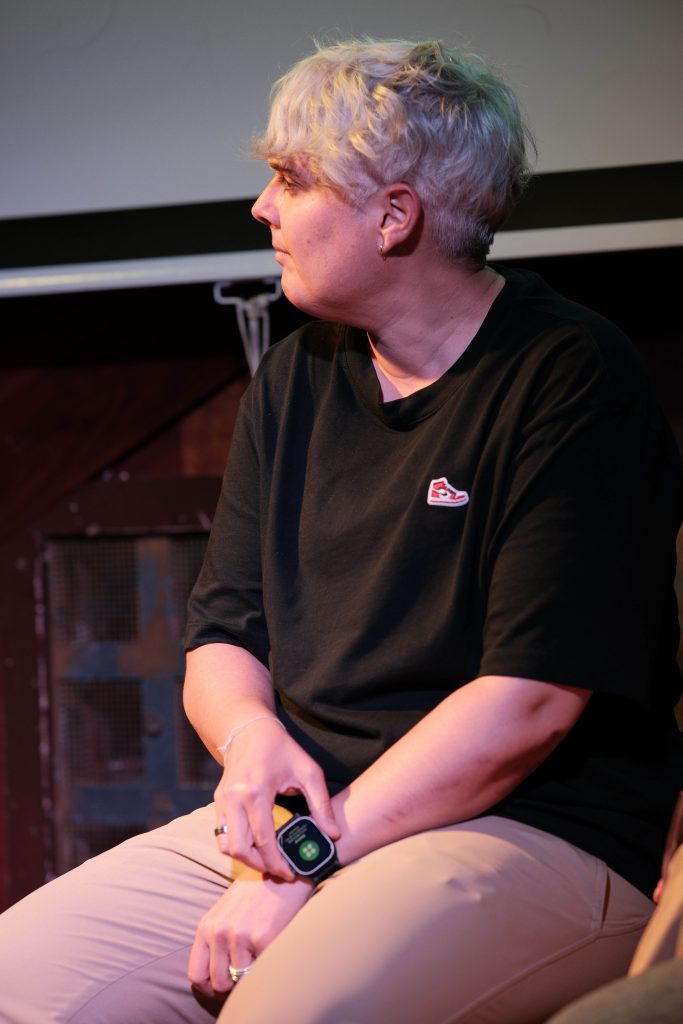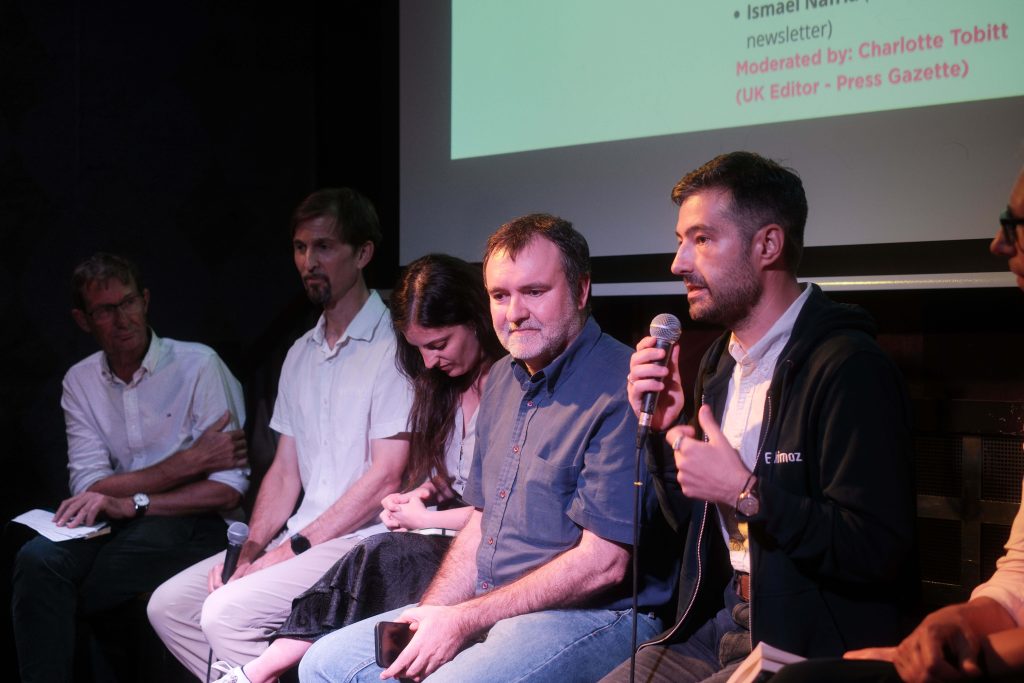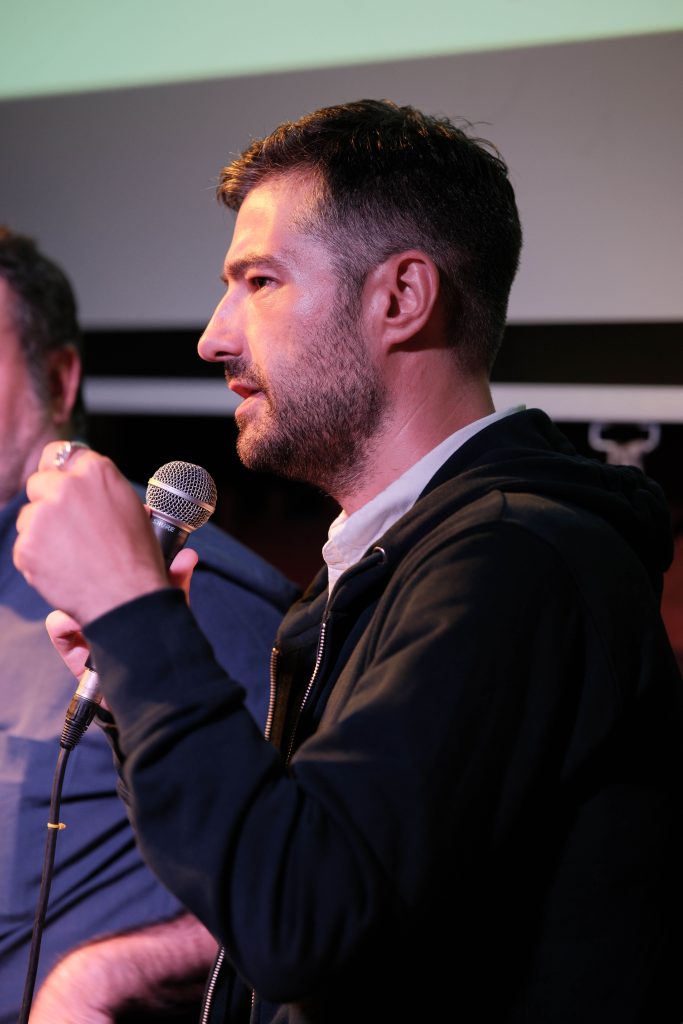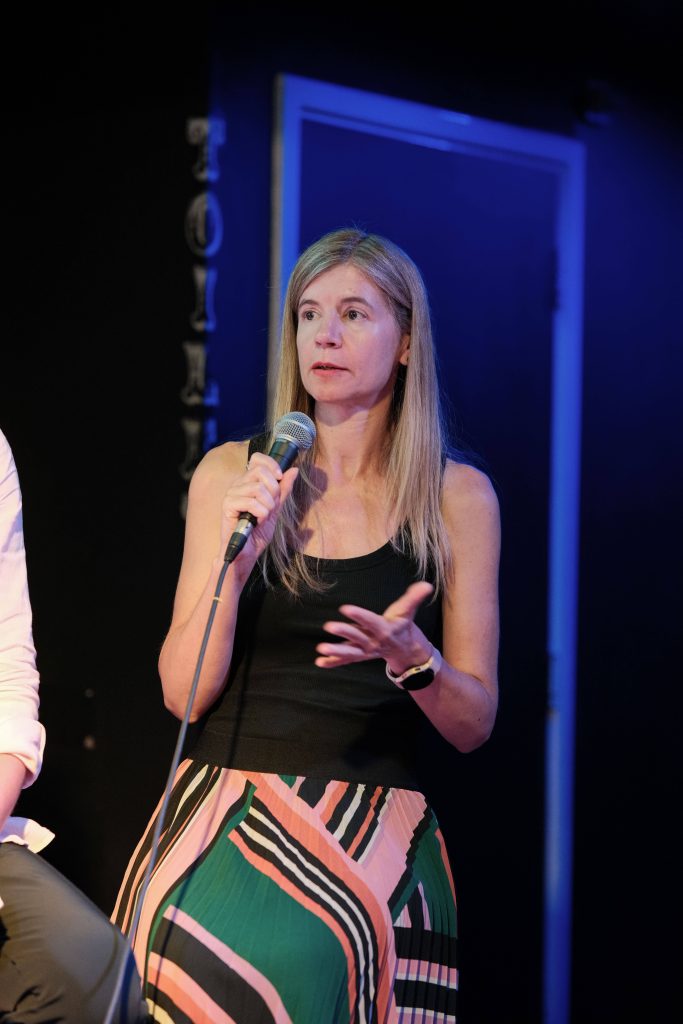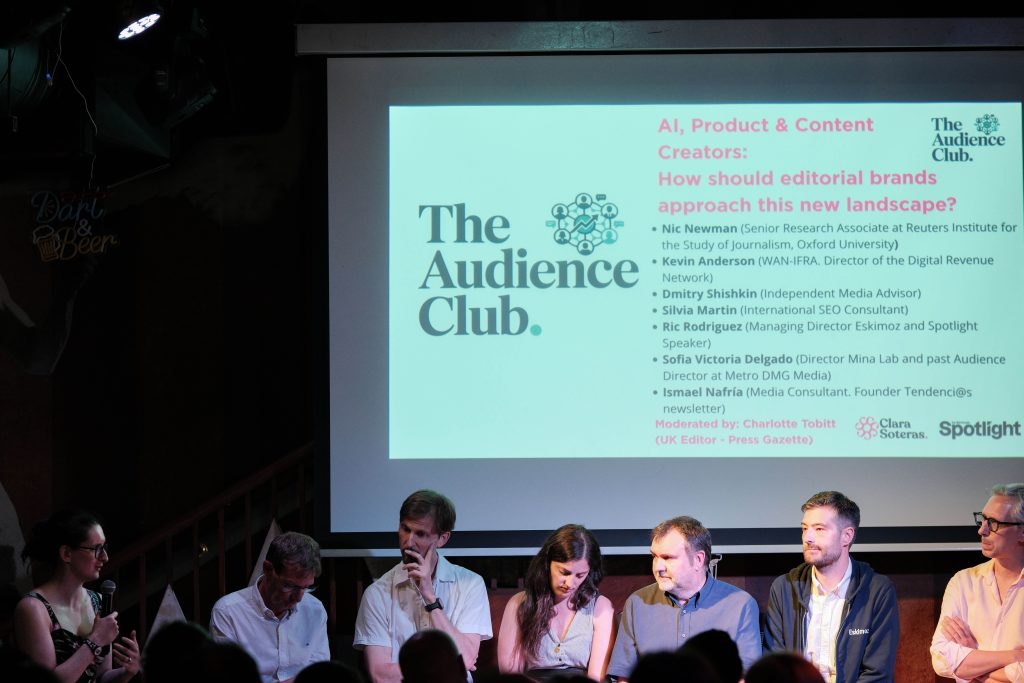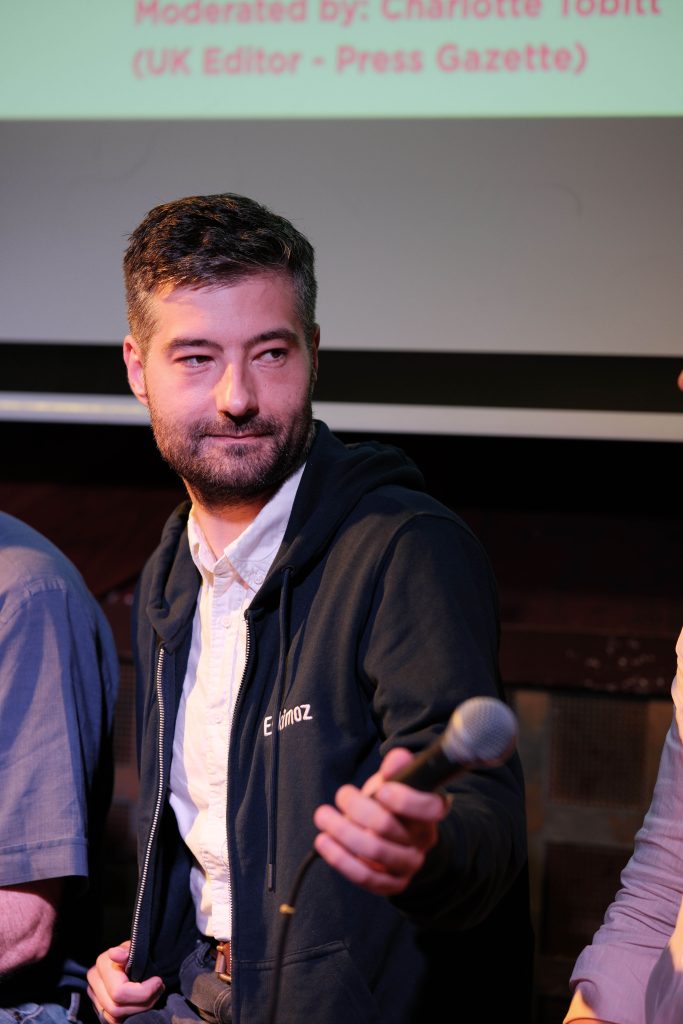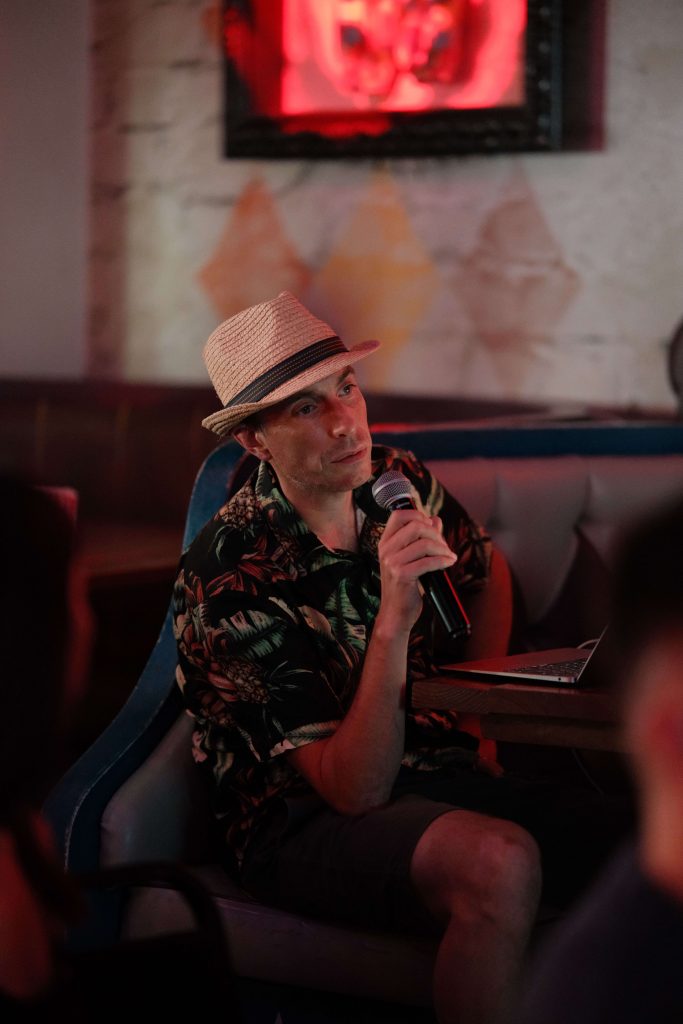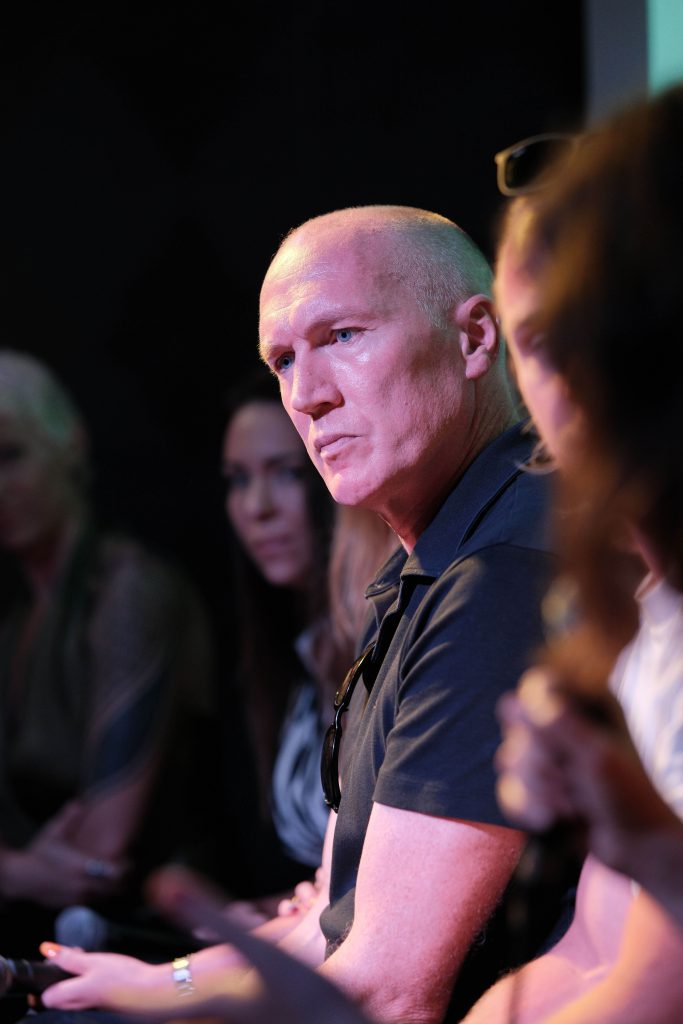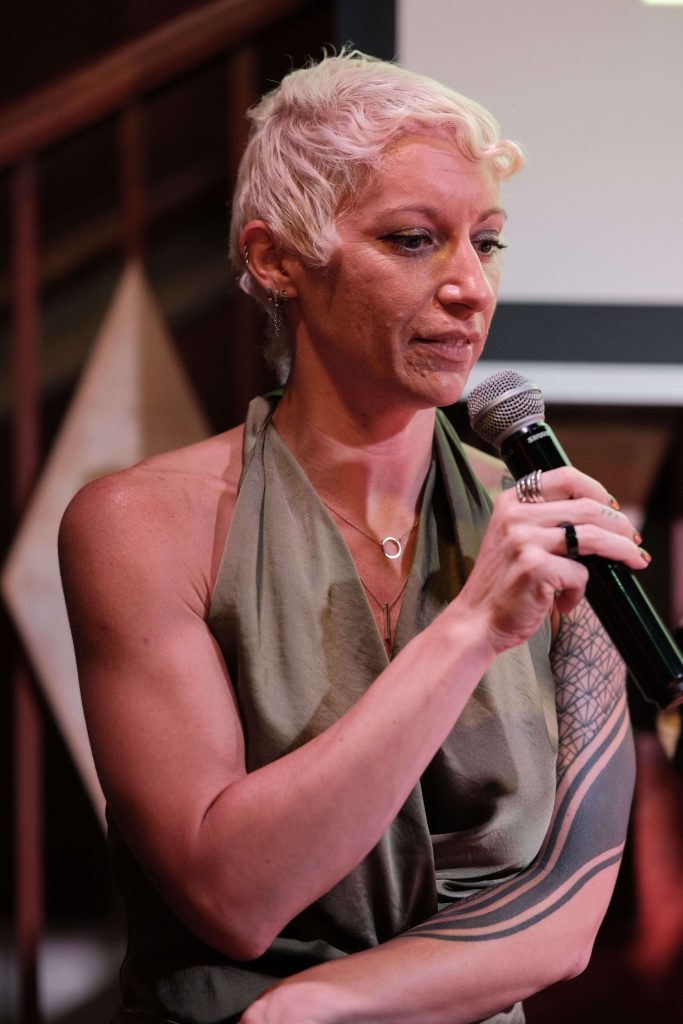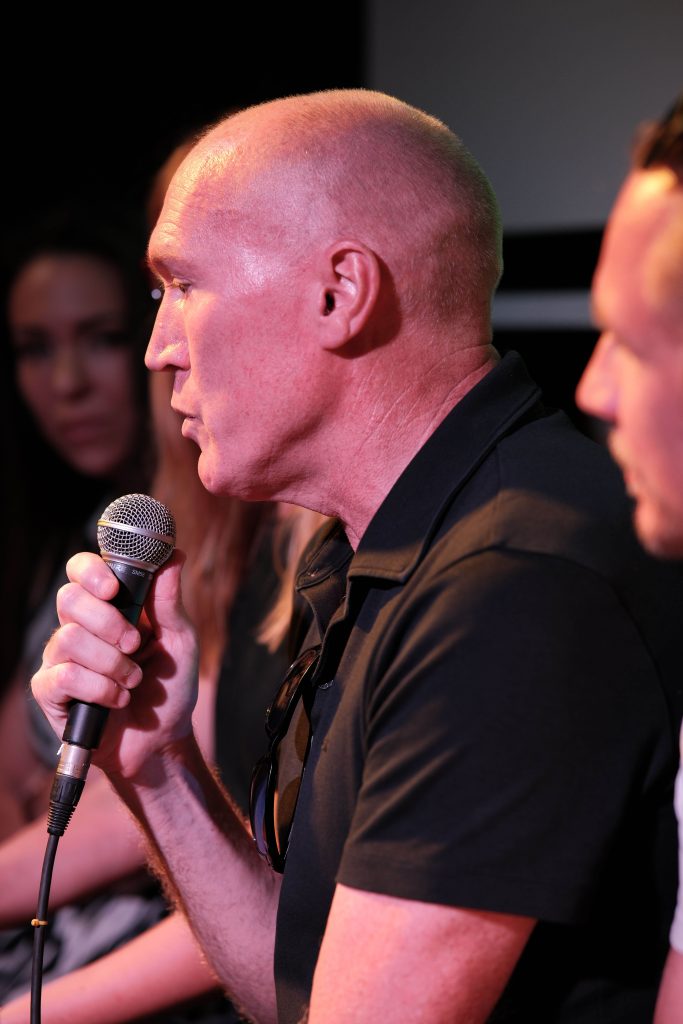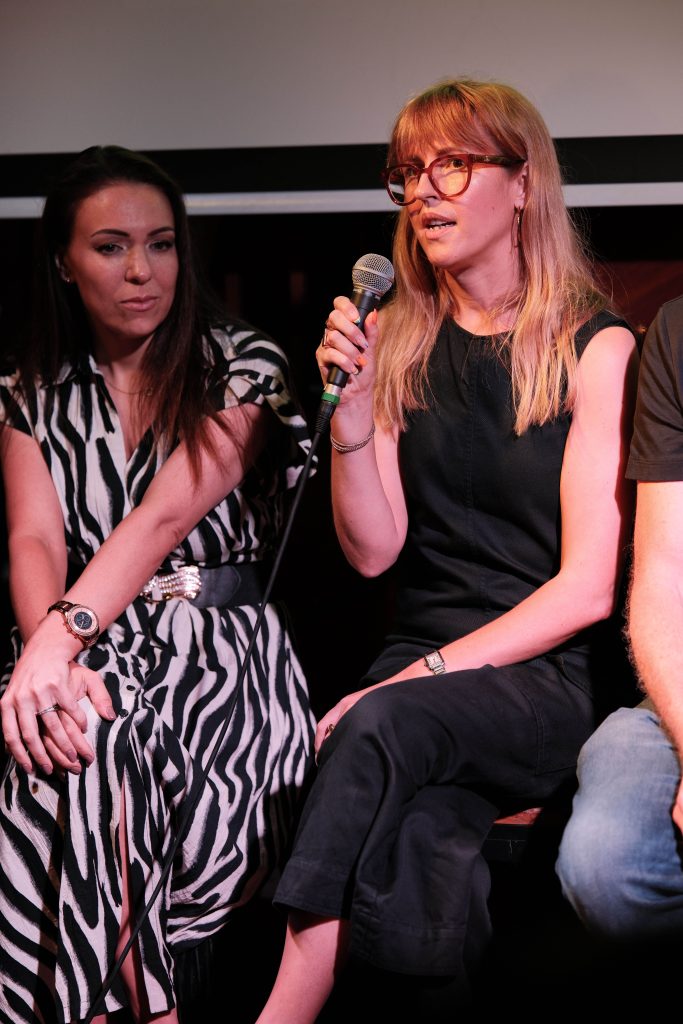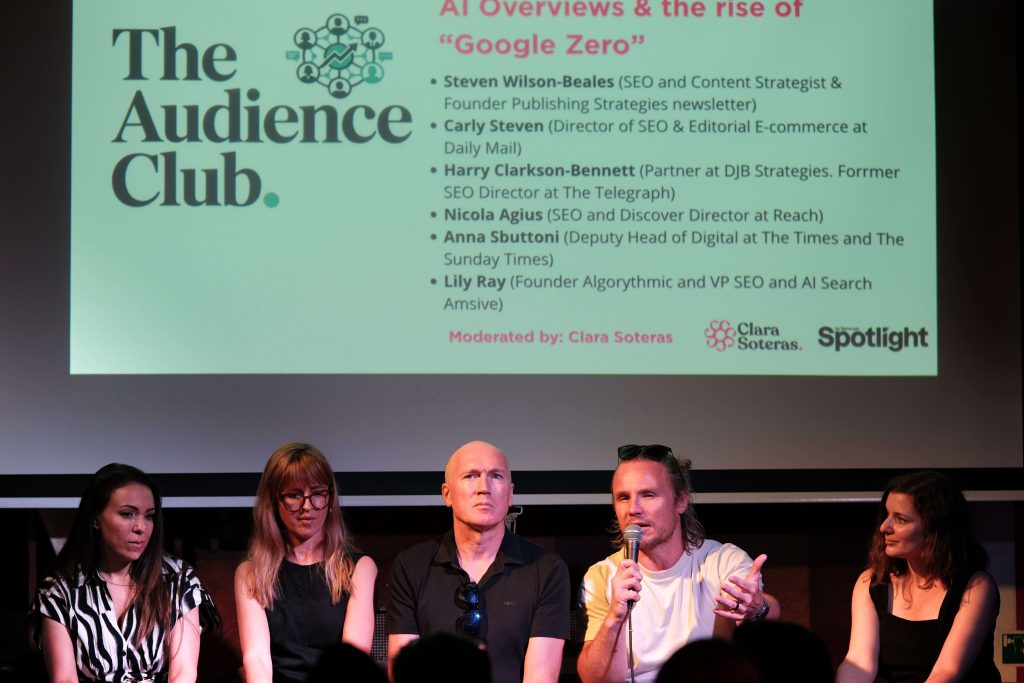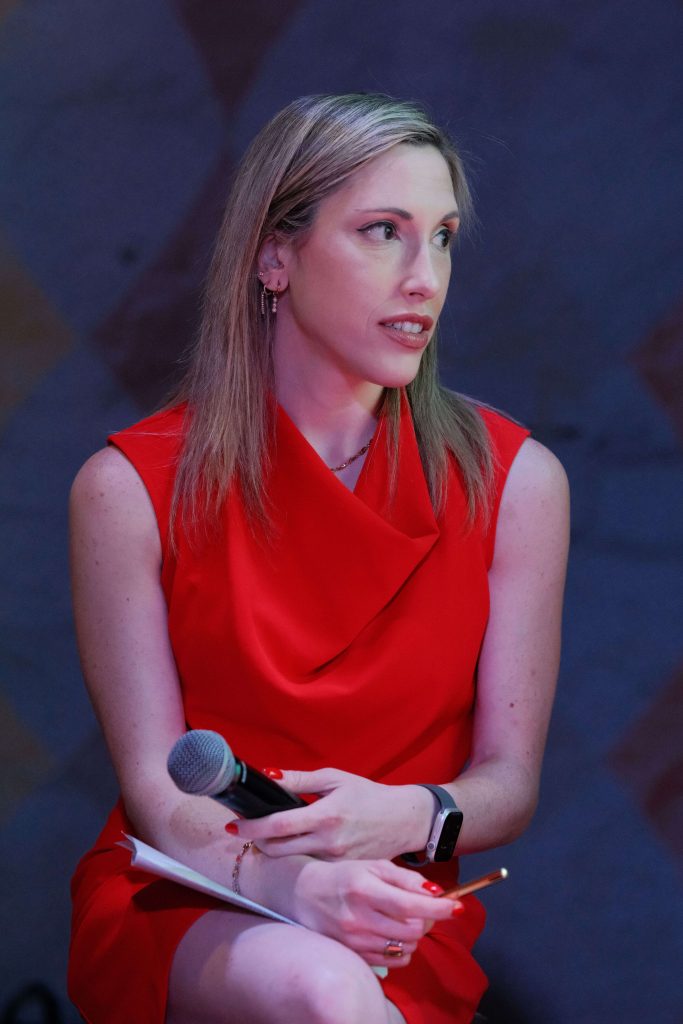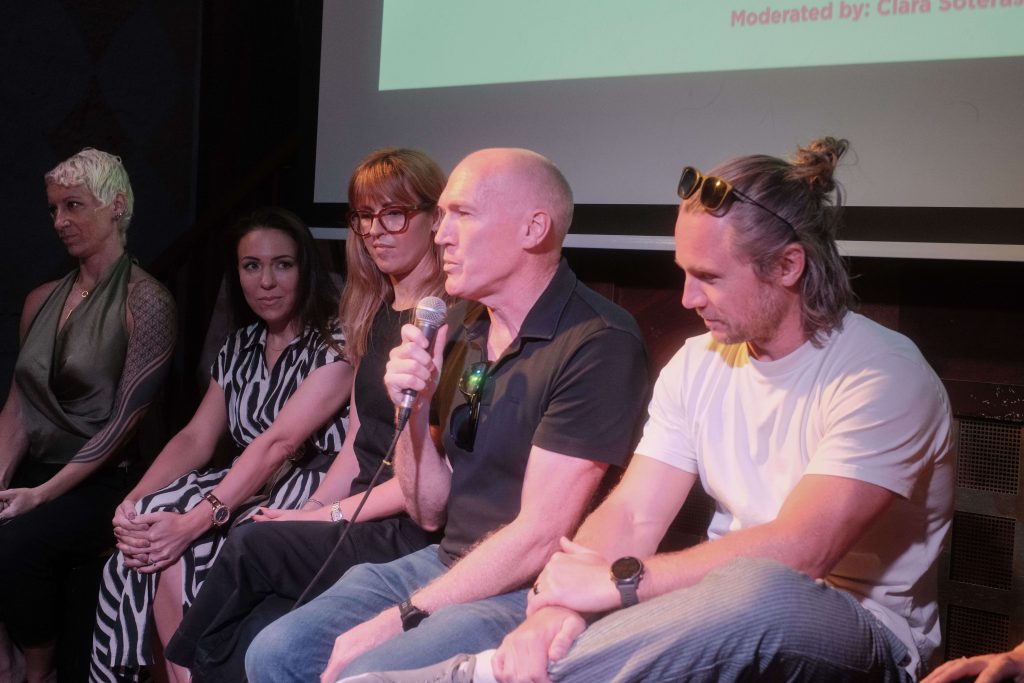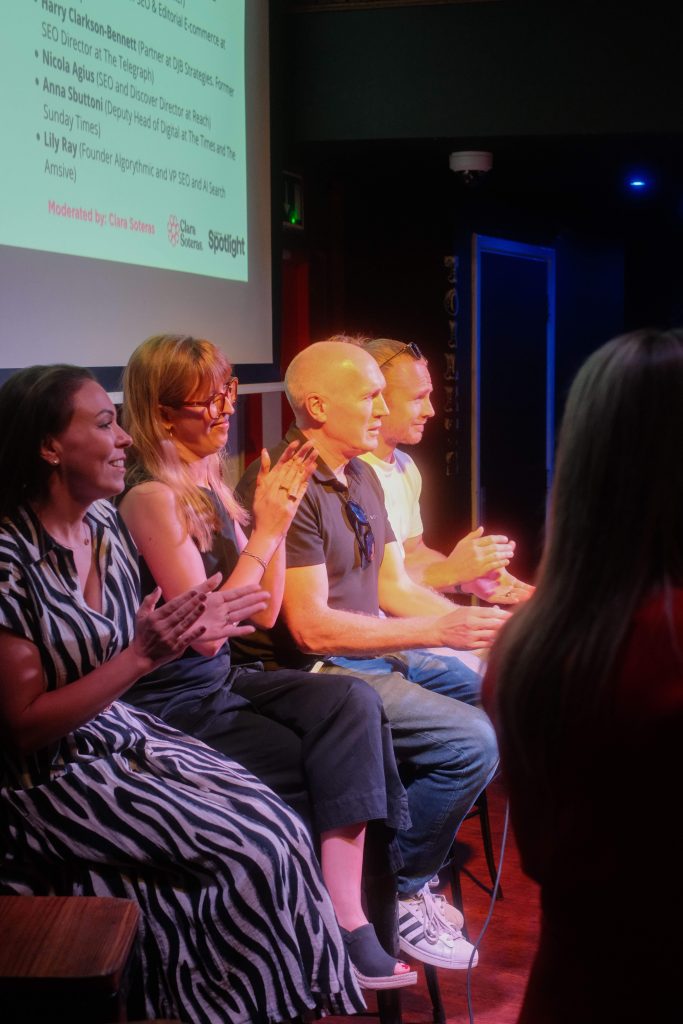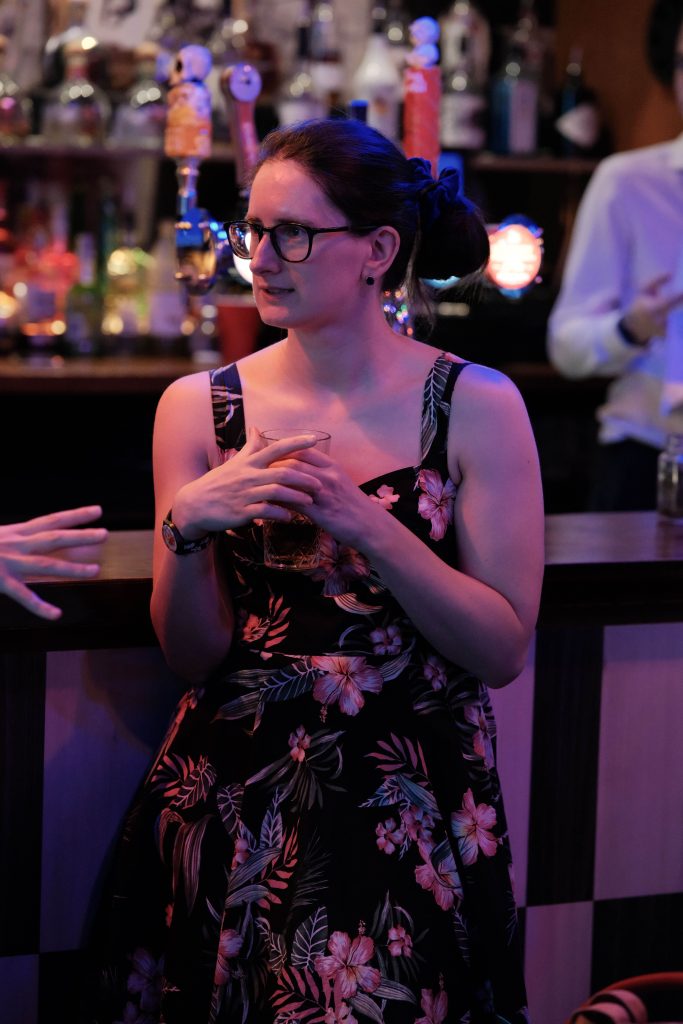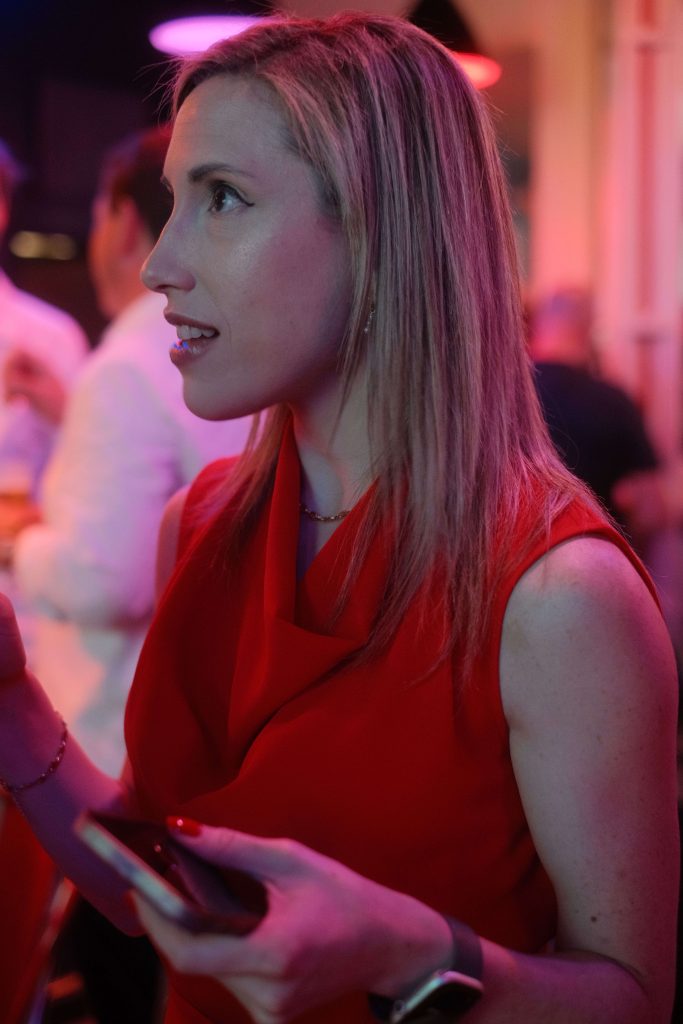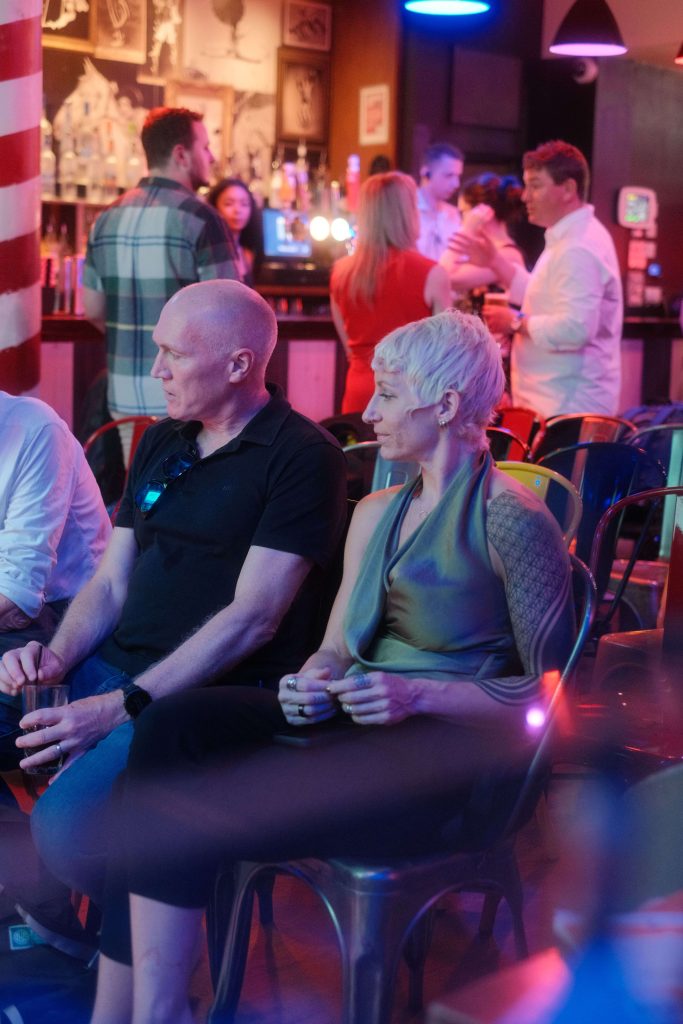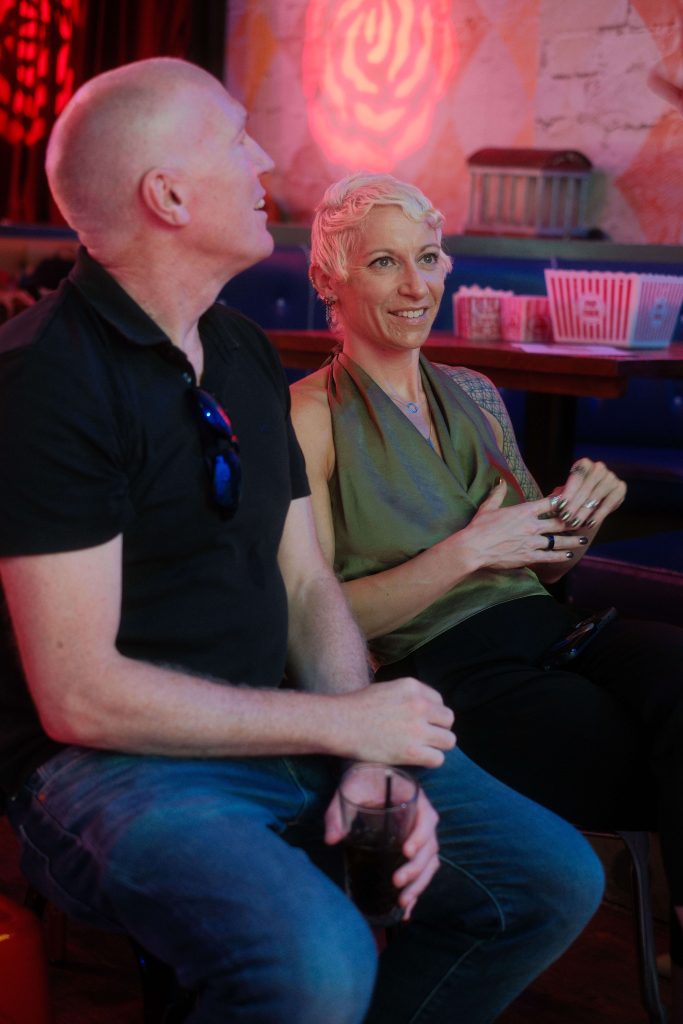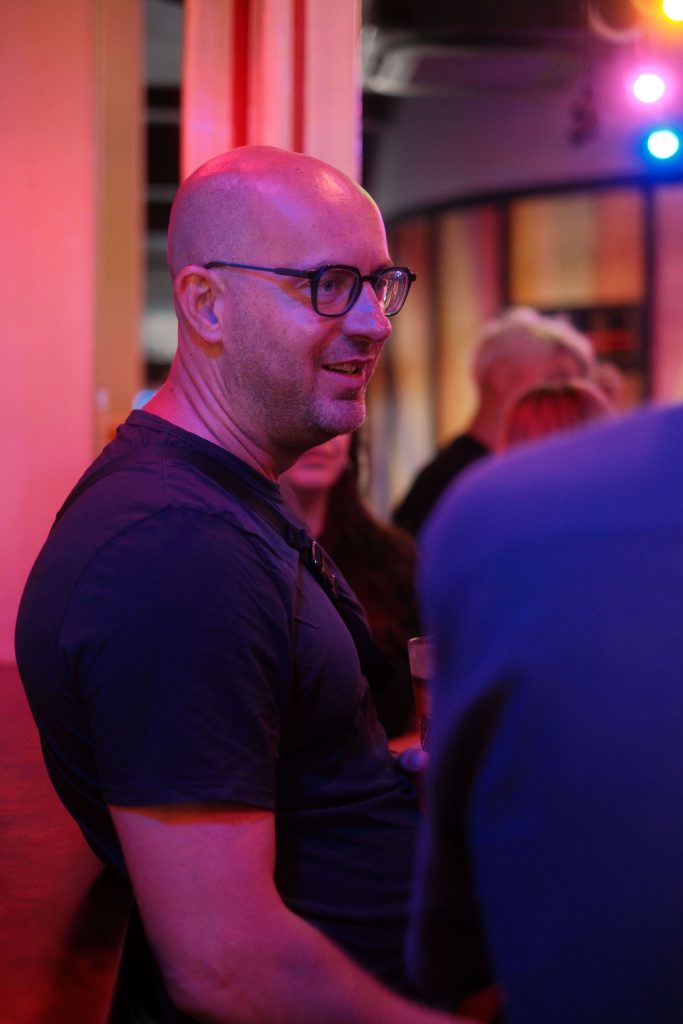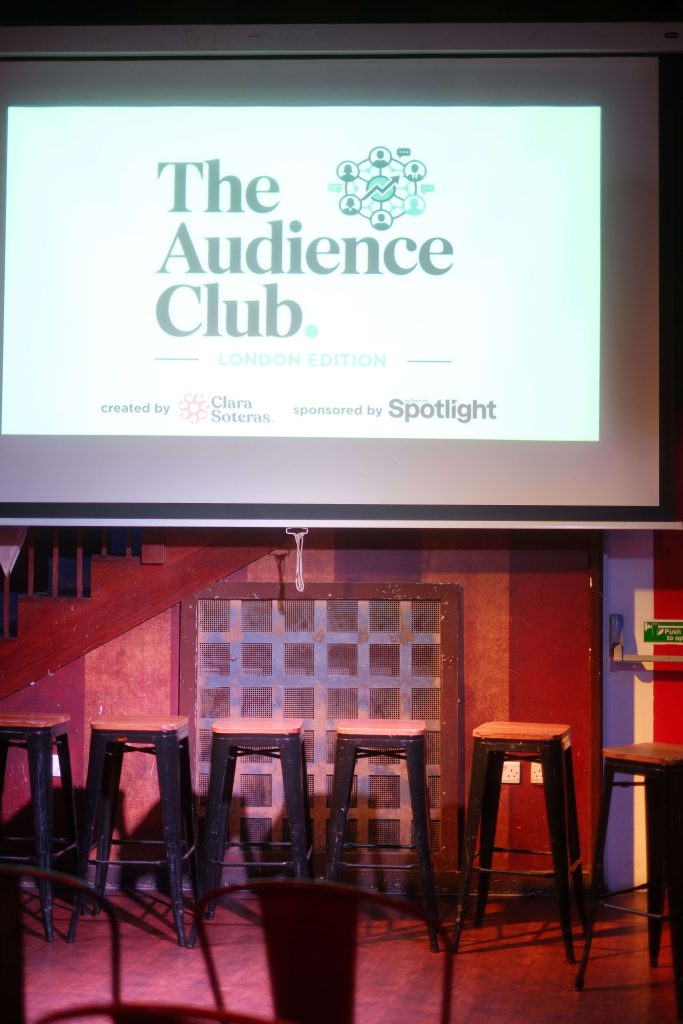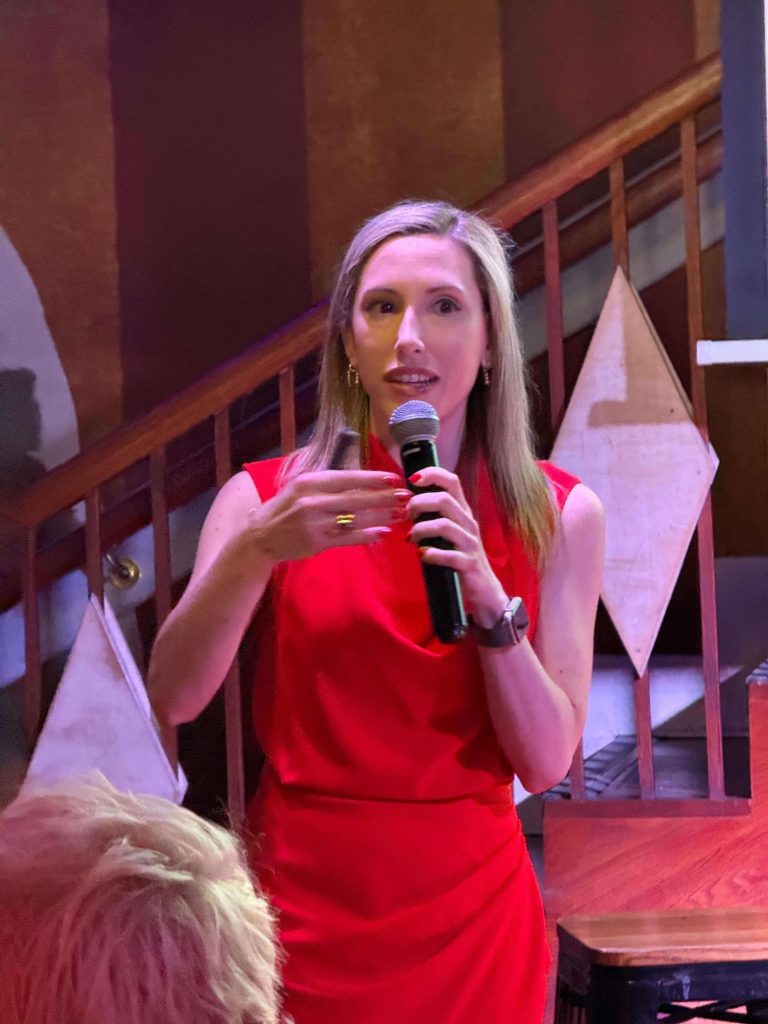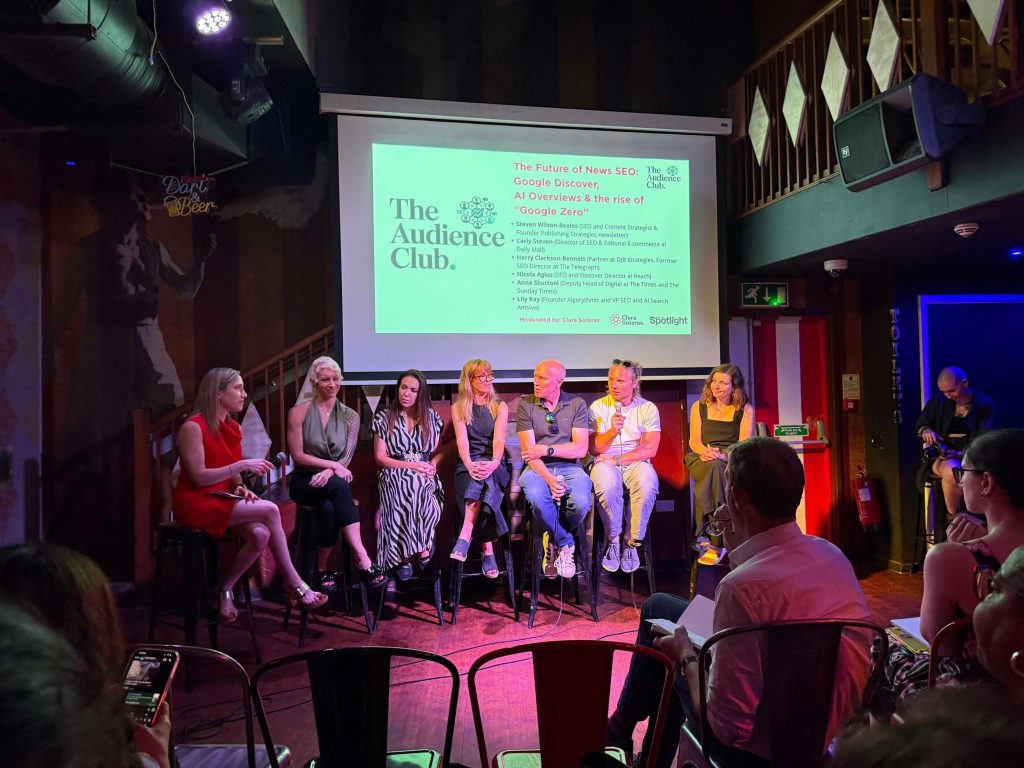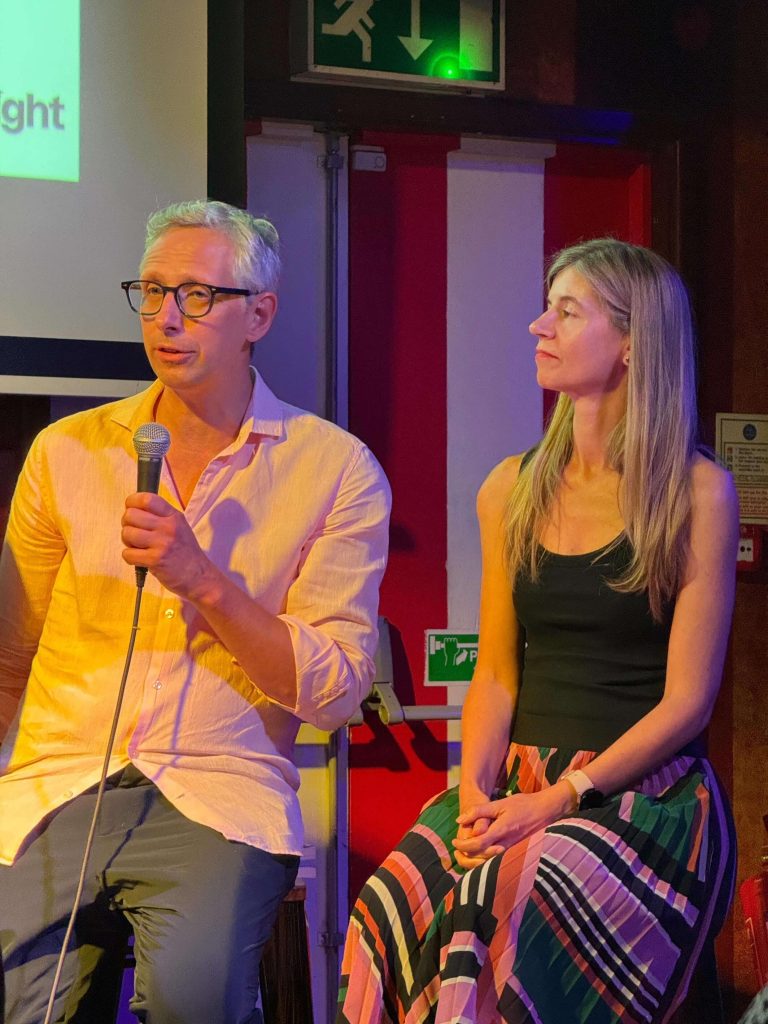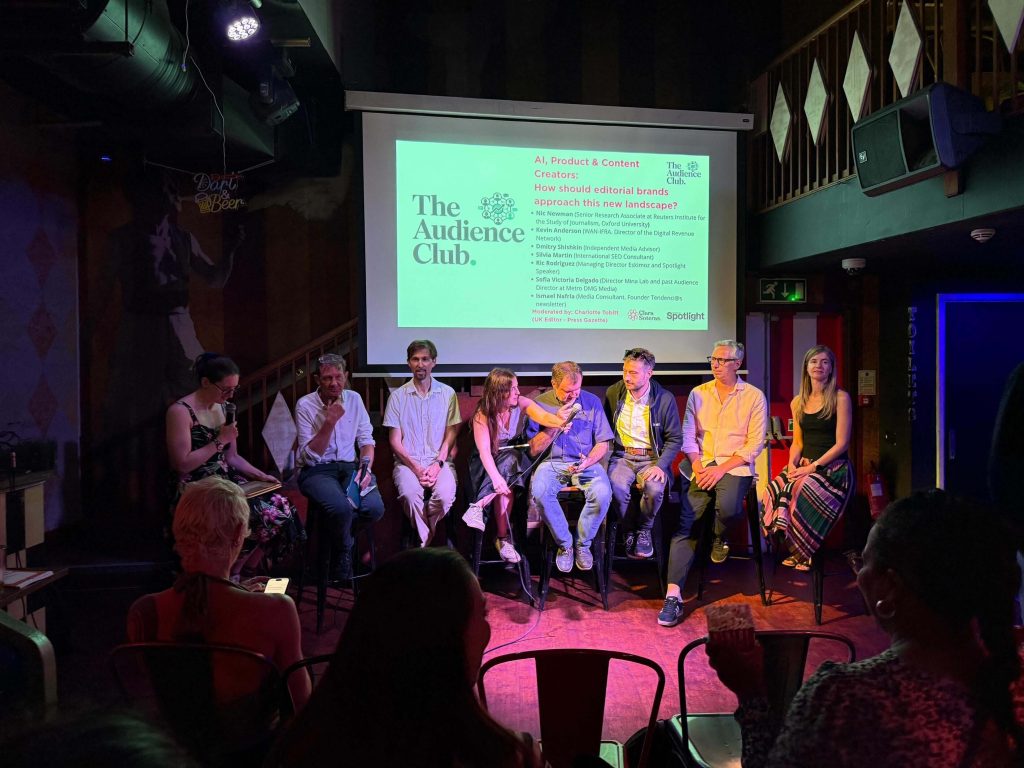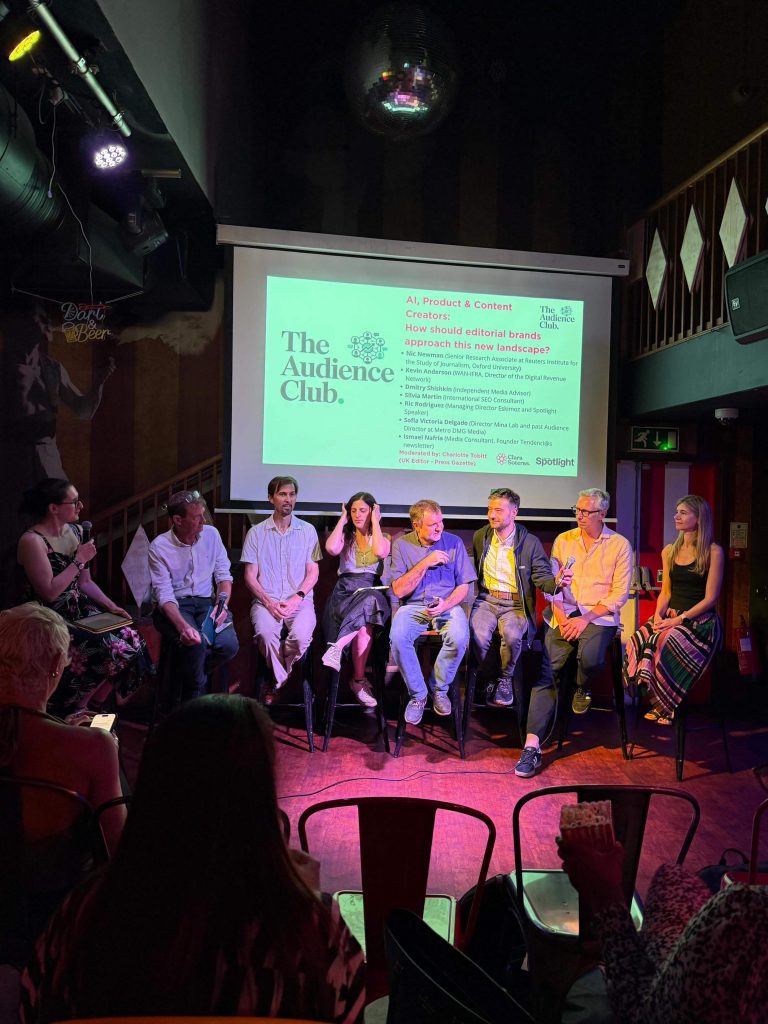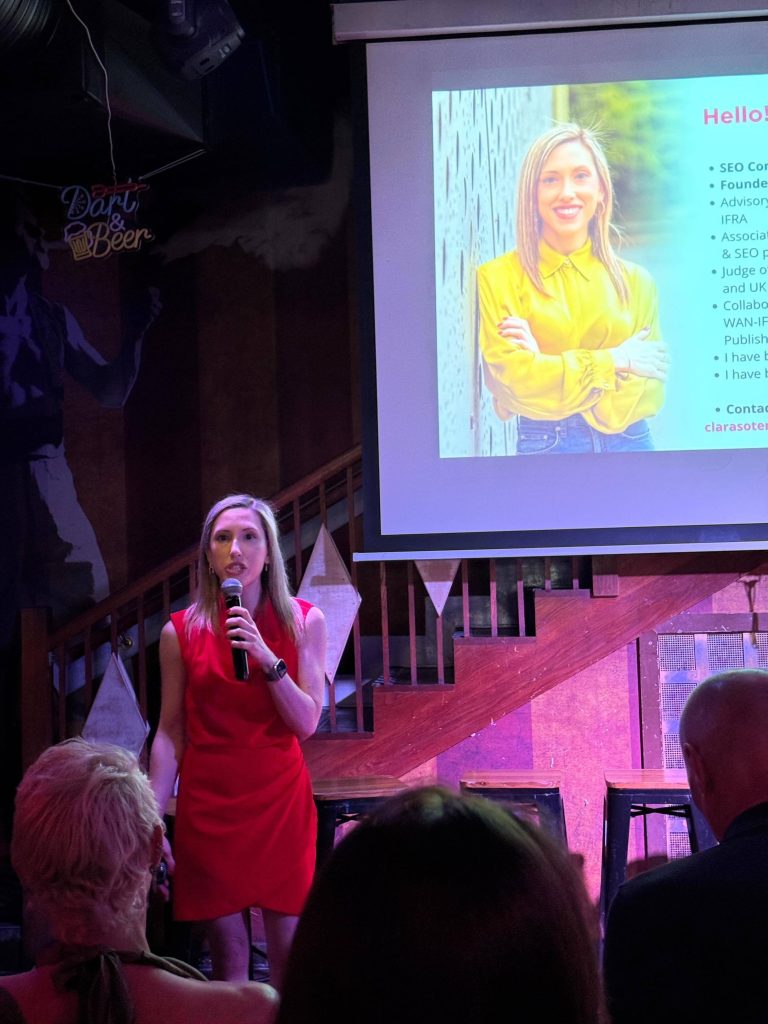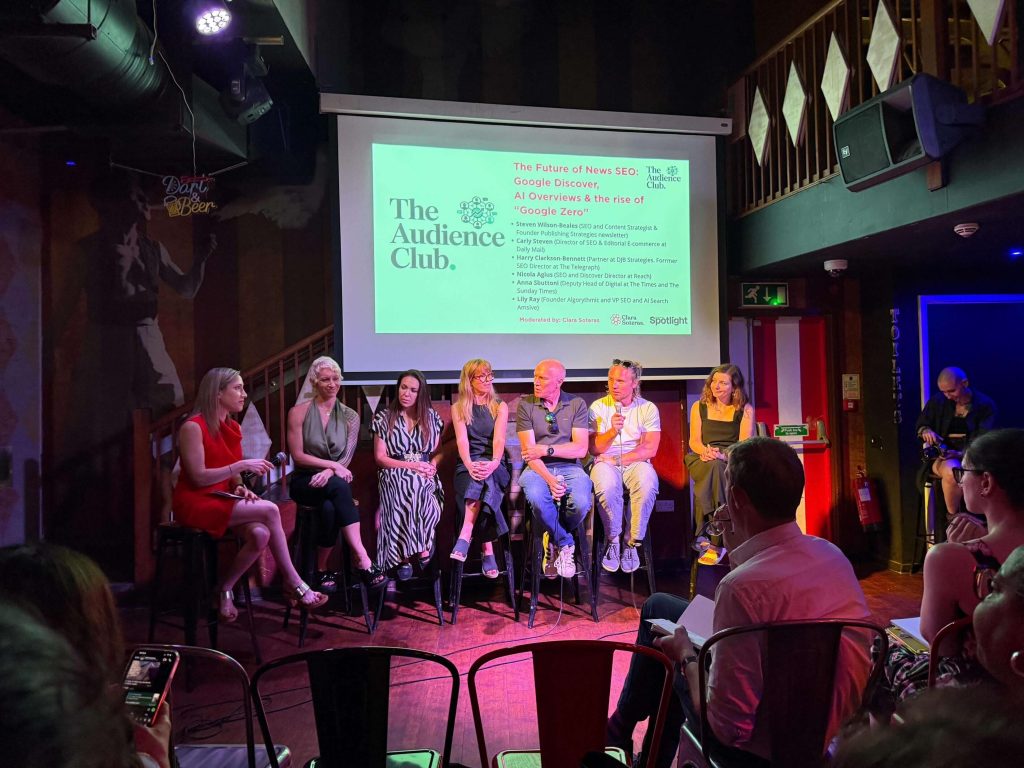
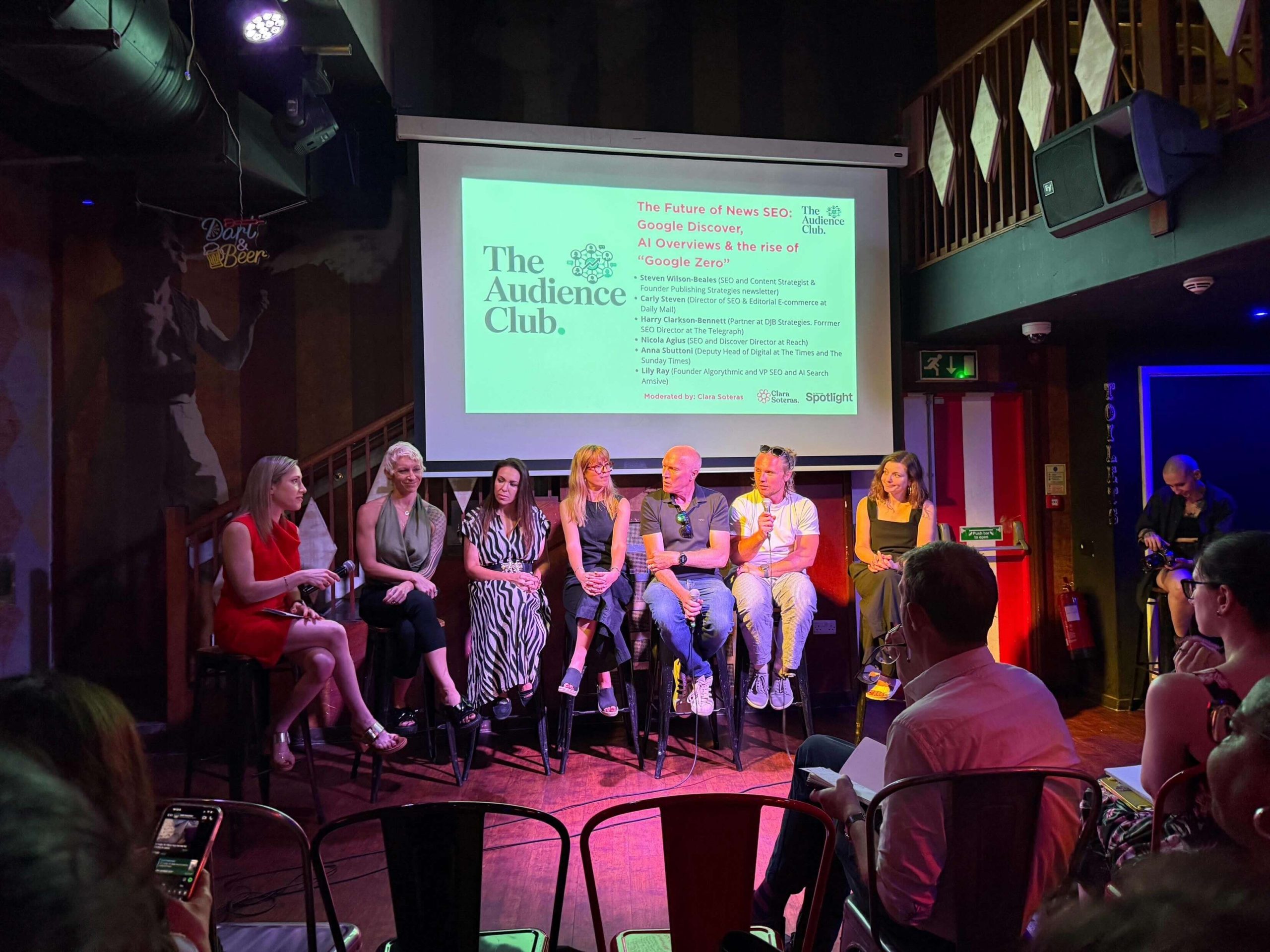
The publishing industry is evolving faster than ever, and that’s exactly why I created The Audience Club: a community that I poured a lot of excitement into, with one simple goal: to bring together the people shaping the future of media to learn from each other, exchange ideas, and build genuine connections. After an amazing first edition in New York, our second stop was London, where more than 80 professionals from SEO, AI, product, editorial, and publishing came together for an evening of conversations and networking. I’m incredibly grateful to all of our speakers, whose generosity in sharing their expertise made the event truly valuable. A huge thank you as well to Spotlight by Semrush for supporting the event as our sponsor, and to our fantastic moderators, Charlotte Tobitt from Press Gazette and Nastia Smoroda from Semrush, who guided the conversations and helped make both panels so engaging.
One of the things I enjoyed the most was watching colleagues from leading news publishers listening closely to SEO professionals from global brands, while those same SEO experts became equally engaged when hearing about the challenges and realities of modern newsrooms. Creating a space where these worlds could connect, learn from one another, and spark new conversations is exactly what I had hoped for when I first imagined The Audience Club. Another special moment was presenting my book, SEO Playbook for News Publishers, alongside its editor, Ismael Nafría, who was able to join us in London.

From the popcorn that welcomed everyone and set the tone for the afternoon, to the networking over great food (and even karaoke at Trapeze Bar for the bravest attendees!), the energy throughout the evening was simply incredible. London left me even more excited about what’s next for The Audience Club. Here are some of the key ideas and insights shared by our speakers throughout the evening (and, of course, all the photos from the event at the end of this article!).
Beyond the Click: SEO Experts Chart a New Course for Publishers in the AI Era
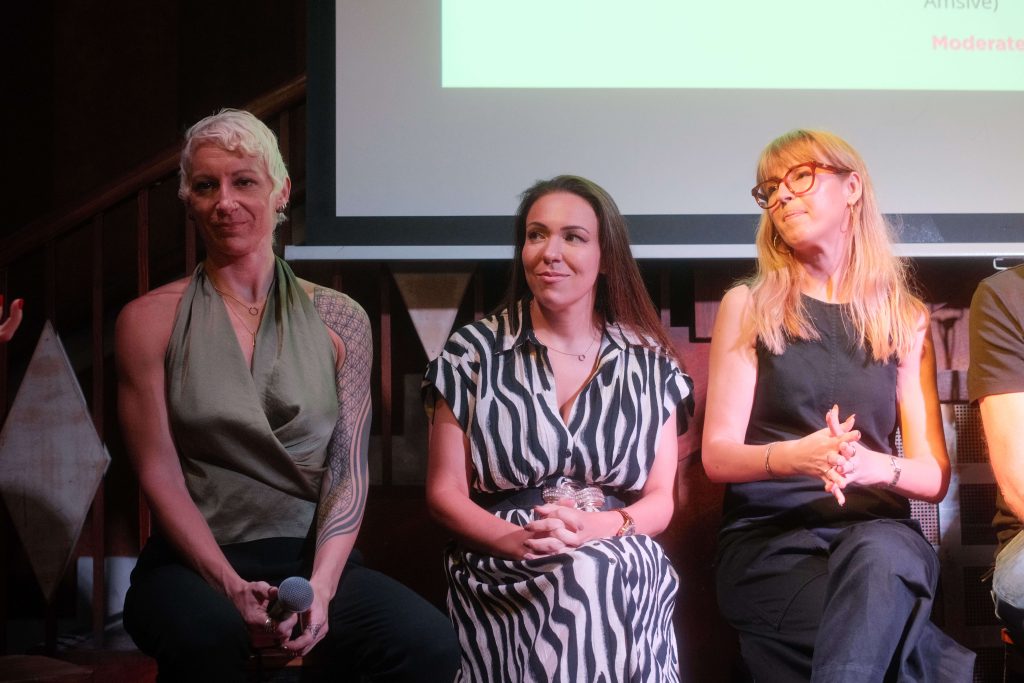
Leading figures in SEO and digital publishing have warned that media organisations must radically adapt their strategies to survive and thrive in an era dominated by Google’s AI-driven shifts. In the first panel discussion experts from top UK media outlets and consultancies urged an urgent move away from traditional traffic metrics towards a more holistic approach focused on brand authority, original journalism, audience engagement, and video. The panel featured Steven Wilson-Beales (SEO and Content Strategist & Founder Publishing Strategies newsletter), Carly Steven (Director of SEO & Editorial E-commerce at Daily Mail), Harry Clarkson-Bennett (Partner at DJB Strategies. Forrmer SEO Director at The Telegraph), Nicola Agius (SEO and Discover Director at Reach), Anna Sbuttoni (Deputy Head of Digital at The Times and The Sunday Times) and Lily Ray (Founder Algorythmic and VP SEO and AI Search Amsive), who collectively offered a roadmap for navigating the challenges of AI Overviews, evolving platform dynamics, and economic pressures on journalism.
Search is far from a “dead channel“
A central theme was the disruptive force of AI Overviews and other Google updates, which are reshaping how audiences find and consume information. The experts agreed that the industry is at a critical juncture, requiring calm analysis and strategic adaptation rather than panic. Steven Wilson-Beales advised leaders to “take a deep breath… get to grips with the data… and try to notice patterns,” recommending investment in “in-house data teams” over reactive outsourcing. The rise of AI summaries that answer user queries directly in search results has led to a significant decline in clicks. Citing the study from early 2026 published by SparkToro and Rank Fishkin, noted that only 32% of searches now result in a click, down from 49% two years prior. However, the panel argued that search is far from a “dead channel.” Wilson-Beales pointed out that even a small percentage of Google’s immense search volume “translates to 33,000 clicks per second,” suggesting users still turn to trusted brands to validate AI-generated answers.
To stand out, publishers must offer what AI cannot. Nicola Agius highlighted that during major events like the World Cup, while AI provides scores, audiences still seek out media brands for unique value. “People are apparently interested in reactions, opinion and analysis. That’s why they’re going to come to us,” she stressed. The key is to avoid “commodity content” that is easily summarised. Agius warned that publishers are “being hit from two directions”: AI summaries pre-empting clicks and Google “grouping together” multiple publishers covering the same event, making originality essential.
Redefining Success: From Traffic to Engagement and Conversions
The panel reached a clear consensus: the era of chasing page views is over. Anna Sbuttoni of The Times advocated for a complete reset of KPIs. “How to measure success… with traffic declining, what else is really important to the business?” she asked. For subscription-based publishers, the answer is clear: “it’s conversions… where our subscriptions coming from.” Sbuttoni also urged measuring brand perception within AI surfaces, questioning, “What does your presence in [AI Overviews] and the perception of your brand… bring back to you in terms of subscriptions?”. Nicola Agius argued for a greater focus on engagement signals like return visits, bounce rate, and scroll depth. “If you want people to subscribe and become loyal readers, you need to make sure that they’re enjoying the experience on your website,” she said. Carly Steven of the Daily Mail, which boasts a 67% direct audience, reinforced this, stating, “the importance of brands has never been more important.” She shared that her team uses Google’s Search Quality Rater Guidelines as a benchmark to evaluate user experience at scale.
The Evolving Role of Google Discover
Google Discover was identified as a significant, though volatile, source of traffic. Anna Sbuttoni noted that for The Times, Discover traffic is “up by more than a third year on year,” with a notable shift towards “more original reporting, serious news” performing well. However, she cautioned that they treat it as “bonus traffic,” as it “doesn’t convert in the same way as search does, like nowhere near.” Nicola Agius observed that the Discover landscape has become more competitive, with a 64% increase in publishers, including many regional outlets, appearing in the feed. To succeed, she recommended a “social discover strategy,” pointing to the prevalence of content from X and YouTube. Lily Ray added that entity analysis and compelling visuals are crucial, noting that top-performing content often features images “zoomed into someone’s face, especially a celebrity.”

Diversifying with Video, Audio and New Platforms
The experts unanimously called for a multi-platform strategy, with a heavy emphasis on video. Lily Ray noted that YouTube’s presence in search results is “everywhere… off the chart,” and that Discover often links directly to a brand’s YouTube account. Her advice was blunt: “Take your best people… get them more on video… building up TikTok and YouTube.”However, the panel cautioned against measuring audiovisual success solely on clicks. Harry Clarkson-Bennett argued that video’s purpose isn’t just to “drive a click to the website” but is “designed… to build trust and to humanize your brand.” Anna Sbuttoni agreed, explaining that The Times has worked to “put our journalists like in front of the camera,” which has proven to build the trust that leads to subscriptions. This diversified approach extends to other platforms. Sbuttoni highlighted the need for a Reddit strategy, asking, “What was our Reddit strategy for the World Cup? Because Reddit is right at the top of Google.”
Navigating Generative AI and Building Audience Trust
The panel urged extreme caution regarding the use of generative AI for content creation. Lily Ray delivered a stark warning from her research tracking companies using AI scaling tools: “More than 50% of them are seeing massive traffic declines… I’m seeing over and over again that it’s the AI content.” Regarding Google’s stance, Carly Steven expressed concern about publishers’ ability to opt out of their content being used for AI training, fearing it could be a “golden handcuffs” situation where non-participation means invisibility. This underscores the unresolved issue of value exchange, where expensive journalism fuels the AI models that threaten its business model.
In this environment, building direct audience habits is paramount. Carly Steven emphasised “forming habit” through engaging formats like puzzles that give readers a reason to return. Nicola Agius, quoting SEO expert Barry Adams, gave a final warning on originality: “If your content were to disappear out of the top stories carousel, it would make no difference to searches, then you’re in trouble… Lean into your opinion, lean into what makes you different.” As Harry Clarkson-Bennett reflected on the industry’s recent challenges, he posed a critical question: “Have we been too hyper-focused on search? Probably.” The path forward for publishers lies in answering that question with a diversified, brand-led, and audience-first strategy.
From Reach to Relationships: Media Leaders on Surviving AI and Platform Volatility
The second panel of the evening, moderated by Charlotte Tobitt, UK Editor at Press Gazette, explored how publishers can navigate the disruptive impact of AI, shifting search behaviour, and increasingly unpredictable social platforms. A common theme emerged throughout the discussion: rather than chasing short-term traffic and volatile algorithms, the future of publishing lies in building loyal audiences, creating real value for readers, and developing stronger, direct relationships with their communities. The panel brought together different perspectives from across the industry. The panel featured prominent voices including Nic Newman (Senior Research Associate at Reuters Institute for the Study of Journalism, Oxford University), Kevin Anderson (WAN-IFRA. Director of the Digital Revenue Network), Dmitry Shishkin (Independent Media Advisor), Silvia Martin (International SEO Consultant), Ric Rodriguez (Managing Director Eskimoz and Spotlight Speaker), Sofia Victoria Delgado (Director Mina Lab and past Audience Director at Metro DMG Media) and Ismael Nafría (Media Consultant. Founder Tendenci@s newsletter).

The Big Trends: Personalization, Video, Realism, and AI
The conversation began with each panelist identifying a major trend shaping the industry. A central theme was the audience’s migration from institutional loyalty to personality-led consumption. Nic Newman highlighted this as a move “from reach to relationships,” framing video as a key medium for building sustained audience ties rather than just a mass-reach tool. AI’s role was another dominant topic. Ric Rodriguez observed a “recoupling” of marketing disciplines, where “AI [is] blending into performance marketing and brand marketing,” creating new revenue opportunities for publishers. Kevin Anderson pointed to a potential monetization frontier: “The possibility of [an] AI content licensing marketplace,” where publishers could capture value as AI models train on their content.
Amid these technological shifts, speakers urged a return to core principles. Ismael Nafría called for a “realism movement in the sector,” advocating for strategic focus on “the two-three questions that are really going to make a difference” and building a “real connection with our users.” Dmitry Shishkin pressed for existential clarity, asking publishers to define “why you exist in the first place” to avoid becoming “commodity content” in an AI-driven world.
The Creator Collaboration Conundrum
The panel explored the complex relationship between traditional publishers and the burgeoning creator economy. Referencing the mid-June 2026 Reuters Institute Digital News Report, Charlotte Tobitt noted that creators currently complement, rather than replace, traditional news for most consumers. Panelists agreed that collaborations are increasing, but their purpose must be clearly defined. Nic Newman mentioned that 76% of publishers in a recent survey planned to work more with creators. He emphasized that most creators are “commenting on the news… explaining or remixing… for young people,” not producing original reporting. He advised publishers to “embrace the formats… the informality… but not losing… objectivity and professionalism and accuracy.”
Silvia Martin pointed to Newsweek’s successful three-year video series with personal brand Dorit Clark as a prime example of a fruitful partnership. However, Kevin Anderson questioned the core goal of such collaborations, asking, “Is it a marketing play? Is it to try to inform an audience?… There’s multiple different ways.” Sofia Victoria Delgado warned that simply producing video is not enough. “Making video doesn’t mean that you’ll replicate… the relationship that creators have with their audience,” she said, noting creators’ agility versus newsroom processes with “fifty stakeholders.” Ric Rodriguez added that the line between talent and creators has blurred, urging publishers to adopt a platform-first mindset, especially on channels like YouTube, or risk a “missed opportunity.”

Social Media: A Losing Battle for Loyalty?
A major part of the discussion focused on the challenges of relying on social platforms for audience growth. Dmitry Shishkin described the constant battle for algorithmic visibility as a “losing battle,” encouraging publishers to build direct relationships strong enough that audiences “will not be able to envisage their lives without you.” Nic Newman agreed that social media has limitations when it comes to building loyalty: “It’s social media is about attracting attention, and that’s only got worse.” He explained that platforms increasingly prioritize formats that keep users inside their own ecosystems, making it harder for publishers to convert attention into lasting relationships. However, speakers also highlighted opportunities in formats such as video and audio, which can help publishers build connections even when distributed through third-party platforms. Ric Rodriguez added that as user-generated content continues to improve, publishers need to meet audiences “where they are on the same quality.”
One of the strongest themes throughout the panel was the need to rethink how success is measured. Ismael Nafría challenged the industry’s focus on raw audience numbers, asking: “Where is the real value of the real money in all our operations?” He argued that publishers should prioritize loyal, high-value users, explaining that “10-15% of users create usually like 80-90% of revenues” and that “one percent more of loyal users is much more important than ten percent more users in other places.” Kevin Anderson reinforced this idea by comparing the difference between an anonymous user and a loyal subscriber, describing many social strategies as “a long succession of meet-cutes, where he never put a ring on it”, attention without commitment. Sofia Victoria Delgado connected this challenge to the importance of purpose, asking publishers to define: “What are you meant to solve for your audience or your community, what are you there for?”
Community as the Human Foundation for a Sustainable Future
The discussion concluded with a clear message: community will be one of the biggest competitive advantages for publishers in the future. Speakers agreed that community is not simply a product feature or engagement tactic, but something built through genuine human relationships. Kevin Anderson explained: “Community is not a format… Community is a set of human relationships. Too often in media, we use the word ‘community’ when really what we want is loyalty, and those two things are not the same.”
Nic Newman closed the conversation by highlighting that future growth will come from new models built around “talent, community, loyalty and fandom,” combined with the strengths of traditional publishing. For publishers navigating the AI era, the opportunity is clear: building relationships that technology alone cannot replace. Newman concluded that building community is a crucial defense against AI’s commoditizing effect. He asserted that future growth will come from new models built around personality and fandom. “The growth is going to come in new models, and some of those models are basically built around talent, built around community, built around loyalty and fandom,” he said. “And, we really need to get with a program of understanding how to combine that with our traditional models.”

Brand Is Back: How Perception in Search Has Shifted
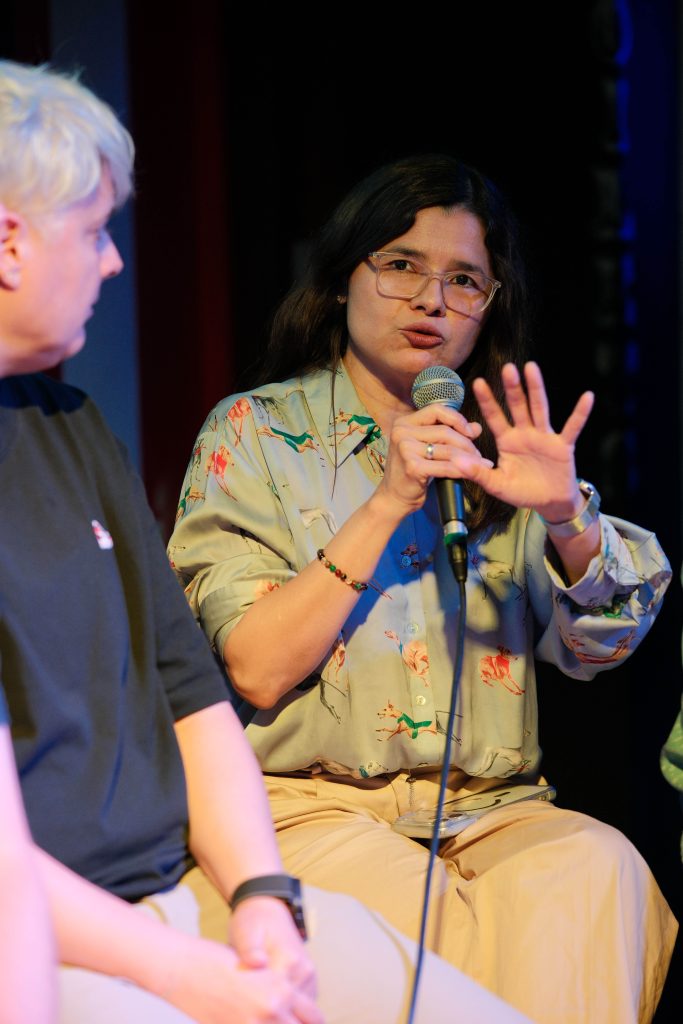
The third panel of the evening brought together a group of leading SEO consultants and industry experts to discuss how AI, user experience, and brand perception are transforming the future of search and content strategy. Moderated by Nastia Smoroda from Semrush, the conversation featured Gerry White (SEO Consultant), Aleyda Solis (Founder of Orainti and SEO & AI SEO Consultant), MJ Cachon (SEO Consultant and Founder of Laika), Jonathan Moore (SEO & Analytics Consultant), Emma-Jane Stogdon (Organic Content Manager at WISE), Alfonso Moure (Technical SEO and Co-Founder & CEO of bigmomo), and Yordan Dimitrov (SEO Manager at Reflect Digital).
The discussion explored some of the biggest challenges and opportunities facing SEO professionals today, from measuring success in an AI-driven search ecosystem to understanding how brand, trust, and user experience will influence visibility in the future. Speakers also discussed the ethical considerations around AI, the risks of manipulation, and the importance of building sustainable strategies beyond traditional rankings. A key takeaway from the conversation was the growing importance of brand presence in search results and the need for publishers and companies to adapt their content strategies to a new environment where AI is changing how users discover and consume information.

Gerry White opened by highlighting a fundamental shift in client priorities: “I’ve got a lot of clients where the number one objective has changed. Now it’s basically: how do you look in your search results?” He argued that branded presence and result quality have returned to center stage after years of keyword-first tactics. “Our branding has become more and more important again,” he said. “At one point, people were like, let’s set up that brand—that actually isn’t quite so important. Yeah, I think that ground has changed.” Yordan Dimitrov warned against mechanical topic planning: “Brand is more important than ever.” He said that listicals aren’t suitable anymore, citing Lily Ray’s research. A third speaker reflected a growing skepticism of lists alone: “I’m not sure about that,” they said, pointing to collaboration and dynamic planning. “They pulled me in and started asking questions about working together.”
UX emerged as a decisive differentiator. “What I like about the market is that they have a very good UX,” said one speaker. “They UX very nice.” Dimitrov connected UX to broader growth. The takeaway: treat UX—performance, structured content, intuitive navigation, and SERP-rich assets (FAQ, video, images)—as a primary input to discoverability, engagement, and conversion, not an afterthought.
Measurement in the Age of AI: Move Beyond Broken Metrics
Aleyda Solis challenged legacy analytics frameworks. “We, unfortunately need to stop over relying on the easy metrics that we have been using before, like direct or indirect or track research,” she said, calling them “broken” for capturing AI-generated answer influence. She proposed more creative measurement—correlating AI answer visibility with shifts in branded searches and traffic—and simple customer research: “I just had a little survey at the end of the conversion journey… Asking the users… ‘How did you hear about us?’ And ten percent of those users were saying, ‘From Eric Bunkers.’ That have been assigned to direct traffic.” Solis framed the mandate as “search optimization everywhere,” integrating traditional search and LLM-driven discovery rather than treating them in isolation.
Moderator Nastia Smoroda reframed link value through layered models: “Regarding being cited, having links—there are like three levels that I know: people coming from the HITS view or the PageRank view. Four times or eight times better and productive.” She pressed for clarity on outcomes: “If we say what is the end goal: being cited is our ability that you will receive a link. Or being mentioned also your ability that the person will go exactly to your website. Is this the end goal of all the work that we’re going to do with AI, SEO, and the rest of the programs? Or maybe you could add something else to it?”
Human vs. AI Content: Value, Origin, and Editorial Guardrails
Smoroda posed the philosophical question: if AI-generated content solves a user’s problem, does origin matter? Alfonso Moure offered nuance: “If the content generated by AI is useful, I don’t see the problem,” especially for straightforward instructional content like “how to change the world.” But he drew a line for high-stakes narratives: “For breaking news… or something that is really important for humans, I think there’s value on this human point of view and the way you express what you are feeling.” Emma-Jane Stogdon warned against the temptation to flood the web with average content: “If you’re increasing your output and all of that content is just an amalgamation of everything that’s out there already… then it’s just going to be nice average basic content.” She emphasized the role of human editors to inject “expert led commentary” and unique data, particularly in YMYL sectors. Several speakers advocated a balanced workflow. Gerry White shared: “I’ll take my course, I’ll take my lecture notes, and I’ll say, ‘I’ll chuck it into Chapters’… and it will actually produce something quite readable and quite enticing.” His caveat: “Good quality content produced by an AI is good quality content,” but only within a hybrid model anchored by human expertise.
The panel cautioned strongly against black-hat exploits in new AI systems. “It works until it doesn’t,” said Dimitrov, citing recent evidence of easily gamed formats backfiring. Stogdon stressed the risk calculus: “Any tactics are only going to work until they don’t… it’s about how much risk you want to take.” MJ Cachon was blunt: “You are buying tickets to go down.” Solis connected it to long-term vision: “Do you really think that these systems are not going to catch up as Google did 20, 15 years ago? This is only the start.” Jonathan Moore challenged the logic of risking established brands: “Why risk an actual proper company that you know people that we represent… Why would you jeopardize that on the back of a tactic?”. Alfonso Moure added: “We need to be careful because there are a lot of things that are going to work until they don’t work, so we need to be responsible… Things are not going to get easier; things are probably going to get harder.”

Gerry White flagged video as a high-impact opportunity: “Video is massively underutilized at the moment.” AI is powerful for editing and repurposing clips, but he warned: “Every time I see an advert created with AI, I will never touch that brand ever again. So don’t do bad AI adverts, but do great videos.” Dimitrov reiterated that “content is king,” across owned sites and external platforms. Stogdon urged teams to prioritize updates over volume: “What is safe right now is absolutely optimizing anything you have which has expert commentary or has some original data… It’s going back to the E-E-A-T again.” On Reddit’s growing role as a recommendation engine, White cautioned about AI spam and urged careful, authentic participation.
“People trust people,” MJ Cachon reminded the audience, advocating for visible human experts at the forefront of digital projects. Solis championed Digital PR as non-negotiable: “I believe that we should all be doing digital PR now,” highlighting natural, relevant citations from trustworthy publications as crucial for visibility, particularly as LLMs rely on those signals. She advised using news alerts to hijack trends and plan content calendars, building authority with or without large outreach budgets.
Solis clarified AI’s role in workflows: “The role of AI as an assistant for partners is different than, for example, traditional search results.” She noted AI had begun shifting processes “before the big” generative wave, and that current tools “are just making” existing workflows more efficient rather than obsolete. For media organizations, the mandate is pragmatic: deploy AI to accelerate audits, topic clustering, SERP analysis, and optimization—while retaining editorial judgment, brand guardrails, and UX-centric design.
Will AI Replace Marketers?
Smoroda closed with a playful question about AI conquering humanity. The panel’s answer was a confident no. As Solis put it: “Our job is about optimizing whatever platform the users are using for discovery, buying, searching.”
A huge thank you to all our speakers for sharing their valuable insights, experiences, and perspectives, and for making this second edition of The Audience Club London such a special evening. Your generosity and willingness to share knowledge is what makes this community so valuable. This was our last event before the summer break, but The Audience Club is already working on something different for the end of the year, and we will keep the conversations going. If you would like to bring one of these sessions to your city, just reach out. The community is open to everyone and always looking to grow! A special thank you as well to everyone who joined us, including those who travelled from far away just to be part of the event. The energy, curiosity, and amazing vibes during the networking made the evening even more memorable. And the evening ended on a high note, with some speakers and attendees continuing the networking over karaoke.
More to come soon. 🚀

Note: This summary was created with the help of Plaud AI, a technology that allows you to record any session or talk and quickly generate a structured draft, making it much faster to turn live conversations into articles like this one.